

The Evolution and Digital Transformation of UK & European Funfairs
The Evolution and Digital Transformation of UK & European Funfairs
Introduction
This paper explores the rich history and evolution of the UK and European funfair industry, tracing its path into the powerhouse it is today. It also discusses the growing importance of digital and cashless technologies in modernizing funfair operations and enhancing guest experiences.
The author, James Careless, is an award-winning freelance writer with numerous credits at IAAPA’s Funworld magazine. This white paper is sponsored by Semnox Solutions. It is a global technology company that provides integrated software and hardware solutions primarily for the leisure and entertainment industry.
Part One
Medieval Fairs: The Roots of Funfairs
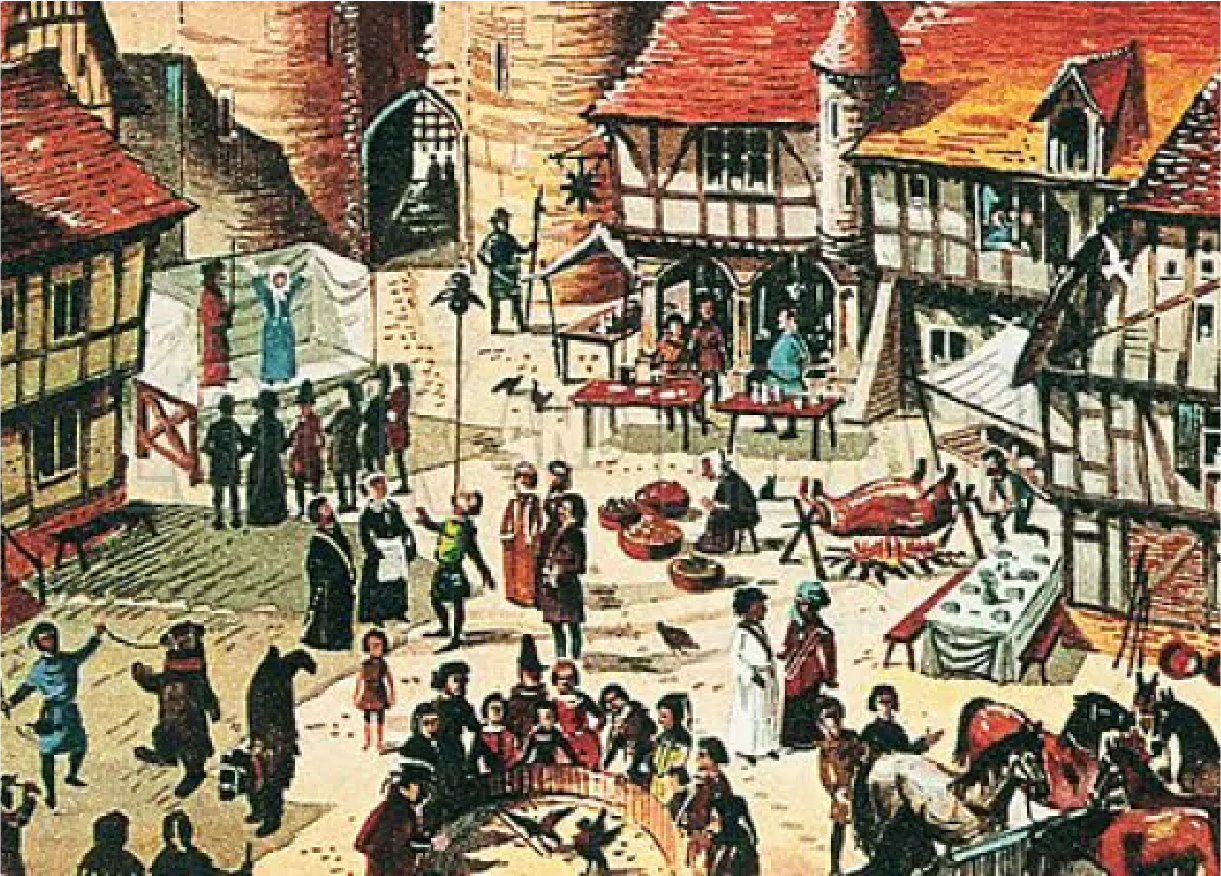
Funfairs trace their heritage back to medieval fairs, which began as religious and economic gatherings throughout Europe, especially in the UK, as early as the 7th century . These fairs originally marked Christian feast days and involved merchants coming together to sell goods in churchyards or town centers. Over time, medieval fairs grew into major social and commercial events lasting several days or even weeks, combining trade with entertainment and festive activities.
Notable funfair examples include Stourbridge Fair in Cambridge (UK), established in 1211, which became the largest annual fair in Europe. At its peak, the Stourbridge Fair attracted merchants from across the continent for over four weeks. (Its run ended in 1933, followed by a revival in 2004.) These fairs featured a mix of market stalls, entertainers, performances, and rides — a prototype of today’s funfairs. The Showmen, a traveling 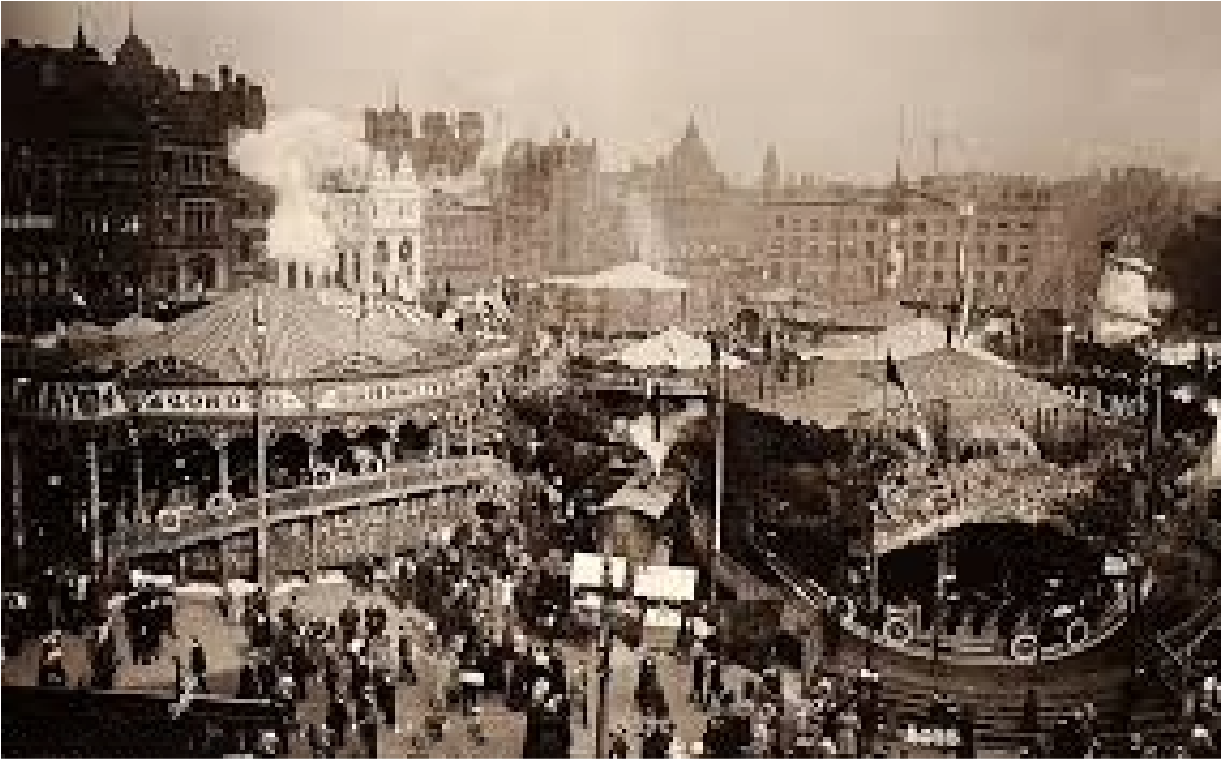 community of entertainers and operators, consolidated their role from these early fairs, evolving into an organized guild by the late 19th century known as the Showmen’s Guild of Great Britain. They are still in existence today.
“The rest of Europe staged medieval fairs, some of which evolved into modern funfairs,” said Vinayaka Kamath, Business Head – UK and Europe at Semnox Solutions. “As in England, the original focus of these events was trade. But they eventually attracted entertainers and amusements, which are at the core of funfairs today.”
Evolution into Modern Funfairs
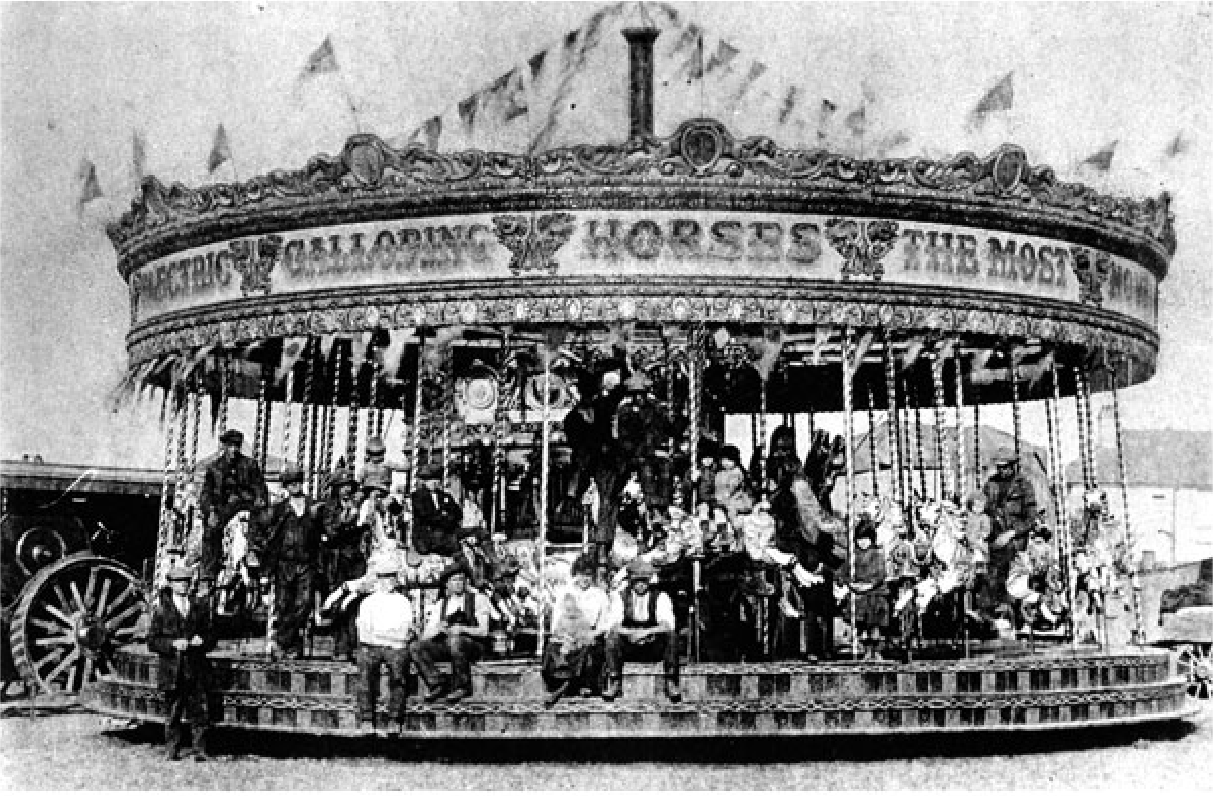 Indeed: From these medieval origins, funfairs developed through centuries of technological and cultural change. Steam-powered rides, electric lighting, and later motorized attractions enhanced the spectacle and appeal, while the traditional token or coin systems emerged as operational staples. The traveling showmen maintained a robust culture sharing knowledge and innovation as the funfair expanded geographically and structurally.
“Today, there are two types of funfairs,” Kamath said. “The first are permanent attractions that run year-round. The second are seasonal funfairs that operate for limited runs, either in one place or on a travelling circuit.”
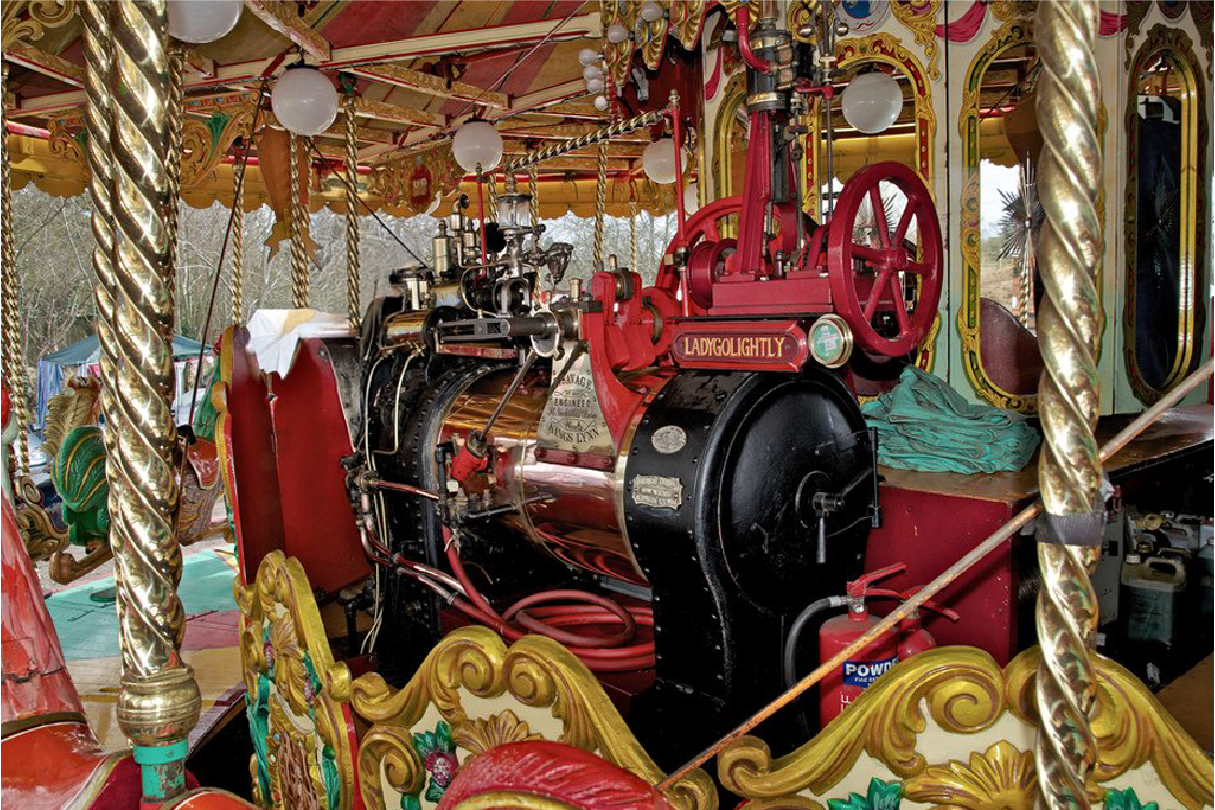 In the second category, winter ride and holiday markets have emerged more recently as traditions established in urban centers. This has occurred predominantly in Europe, where market-style Christmas fairs combined shopping, festive rides, food, and entertainment. These seasonal events resonate with the ancient fair spirit but are adapted to colder months with themed rides and attractions. The winter funfair continues the tradition of temporary, often outdoor setups that are highly dependent on weather and population flow.
All told, funfairs remain a cherished and sizable part of the UK and European family entertainment culture. They attract multi-generational visitors seeking affordable, lively outings, combining classic rides, games, food stalls, and live entertainment.
The Current Funfair and Winter Event Market in the UK and Europe
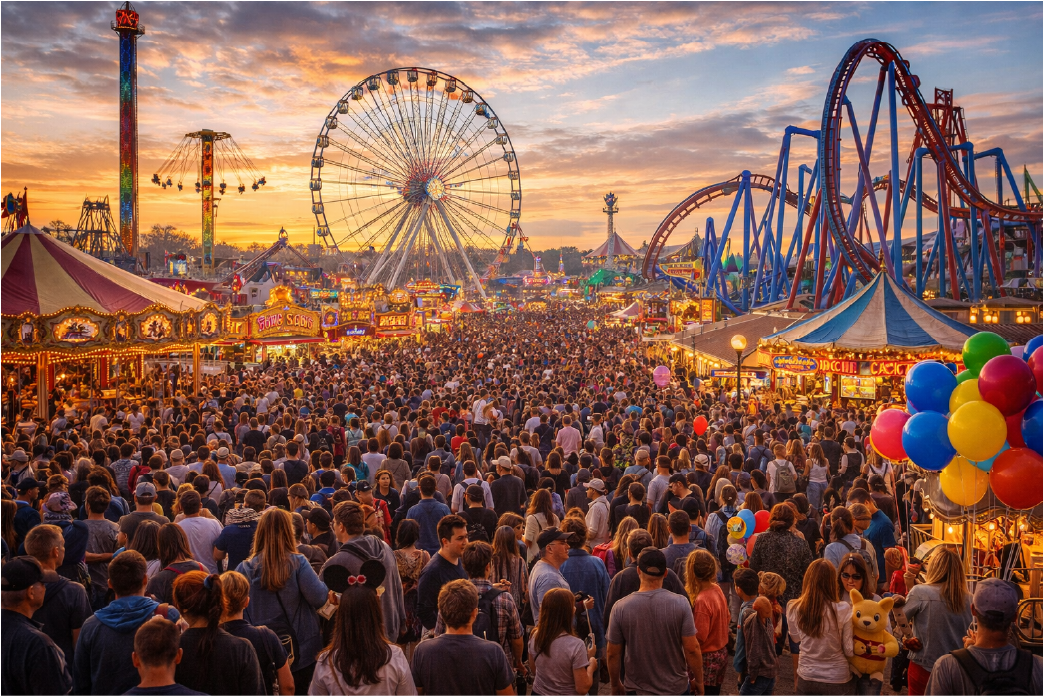 The funfair market (both permanent and seasonal) is a substantial and vibrant segment within the broader family entertainment and leisure industry in the UK and Europe. The market size for amusement parks and themed events in Europe is projected to reach approximately US$1.35 billion in 2025, with continuing growth driven by rising disposable incomes, tourism, and demand for immersive experiences. In the UK, the amusement parks sector generated revenues exceeding US $1.7 billion in 2025 and is expected to grow steadily over the coming decade.
Sales volumes at funfairs are driven by high family participation, attracting a broad demographic from young children to older generations. Families appreciate these events for their affordability, variety of attractions suitable for all ages, and social atmosphere. The flexibility of offering multi-ride packages, bundled food and merchandise deals, and loyalty programs has also helped retain visitor interest while increasing per-guest spend.
Why Funfairs Remain Relevant
Several factors underpin the continued relevance and growth of funfairs and winter events:
- Cultural Tradition: Funfairs remain embedded in the UK and European lifestyle as time-honored gatherings providing entertainment, socialization, and holiday festivities. They evoke nostalgia while evolving with modern tastes.
- Family Appeal: Funfairs offer attractions for all ages and demographics, making them ideal for family outings while creating repeat visitation opportunities.
- Experiential Demand: Rising guest expectations for immersive, technology-enhanced experiences are driving funfairs to innovate with ride offerings, themed environments, and interactive features.
- Event-Based Engagement: Seasonal and special event timing (such as Christmas markets and summer festivals) create concentrated visitor influxes, boosting revenue and community engagement.
- Economic Contribution: Funfairs and associated winter events contribute significantly to local economies by generating employment, tourism, and vendor opportunities.
Technology Is Boosting Sales
As funfairs adapt to competition from other forms of paid entertainment, technology and digital integration are playing a crucial role in market growth. Cloud-based ticketing, cashless payments, and mobile apps are improving funfairs’ operational efficiency and customer convenience, encouraging higher attendance and per-person spending. Operators are increasingly using data analytics to personalize offers, optimize ride capacity, and manage crowds dynamically — resulting in enhanced revenue and profitability.
Challenges faced by the operators
The nature of the funfair industry is evolving rapidly in response to societal, economic, and technological shifts. There are a lot of them to be dealt with.
Changing Demographics and Staffing Challenges
One of the biggest operational challenges today is staffing. Modern funfairs no longer rely on large family-based showman operations as younger generations pursue diverse careers beyond traditional show business. The labor-intensive nature of manual ticketing, token handling, and onsite validation has become harder to sustain in a competitive job market. Staffing shortages create increased costs and operational risks for funfair operators.
Shifting Customer Behavior
Consumer payment habits have changed decisively in the past decade. Most visitors no longer carry cash routinely, having become accustomed to mobile payments, credit/debit cards, and contactless transactions in daily life. Families and younger audiences especially expect seamless, app-enabled entry and purchases. Expectations now go beyond just admission; guests want a connected, frictionless experience encompassing rides, food, beverage, merchandise, and loyalty rewards.
Operational and Revenue Challenges
Traditional manually-operated systems such as tokens, paper tickets, and wristbands necessitate large teams to manage sales, count tokens, settle cash, and prevent fraud. These outdated processes increase human error risk, limit real-time visibility into transactions, and restrict the ability to dynamically price or upsell based on time of day, season, or guest profiles
“To cope with all of these challenges, the modern funfair industry needs to harness the power of digital transformation,” said Kamath. “Semnox is the only solution provider right now that can make this happen for funfairs through online ticketing, cashless ride operations, and self-service machines that reduce the need for staff while keeping customers happy.”
Theft
Pilferage is an unfortunate reality in the amusement park and family entertainment centers industries, and funfairs are not immune to this problem. Manual-operated point-of-sales systems are particularly vulnerable to theft, due to their lack of built-in automatic transaction documentation and monitoring. Digital systems are far more secure in comparison, because they are built upon consistent record-keeping and transaction control.
 The Qualities of Robust Digital Systems
Funfair owners and operators need robust digital systems. This translates into:
- Time-based and value-based ticketing packages adapting to seasonal demand.
- Dynamic pricing that maximizes revenue while balancing guest flow.
- Integrated point-of-sale (POS) systems that unify entry, rides, food, and merchandise transactions.
- Data-driven loyalty programs capturing customer information for personalized marketing and retention.
- Reduced dependency on manual cash handling, improving security and compliance.
Enhancing Customer Experience
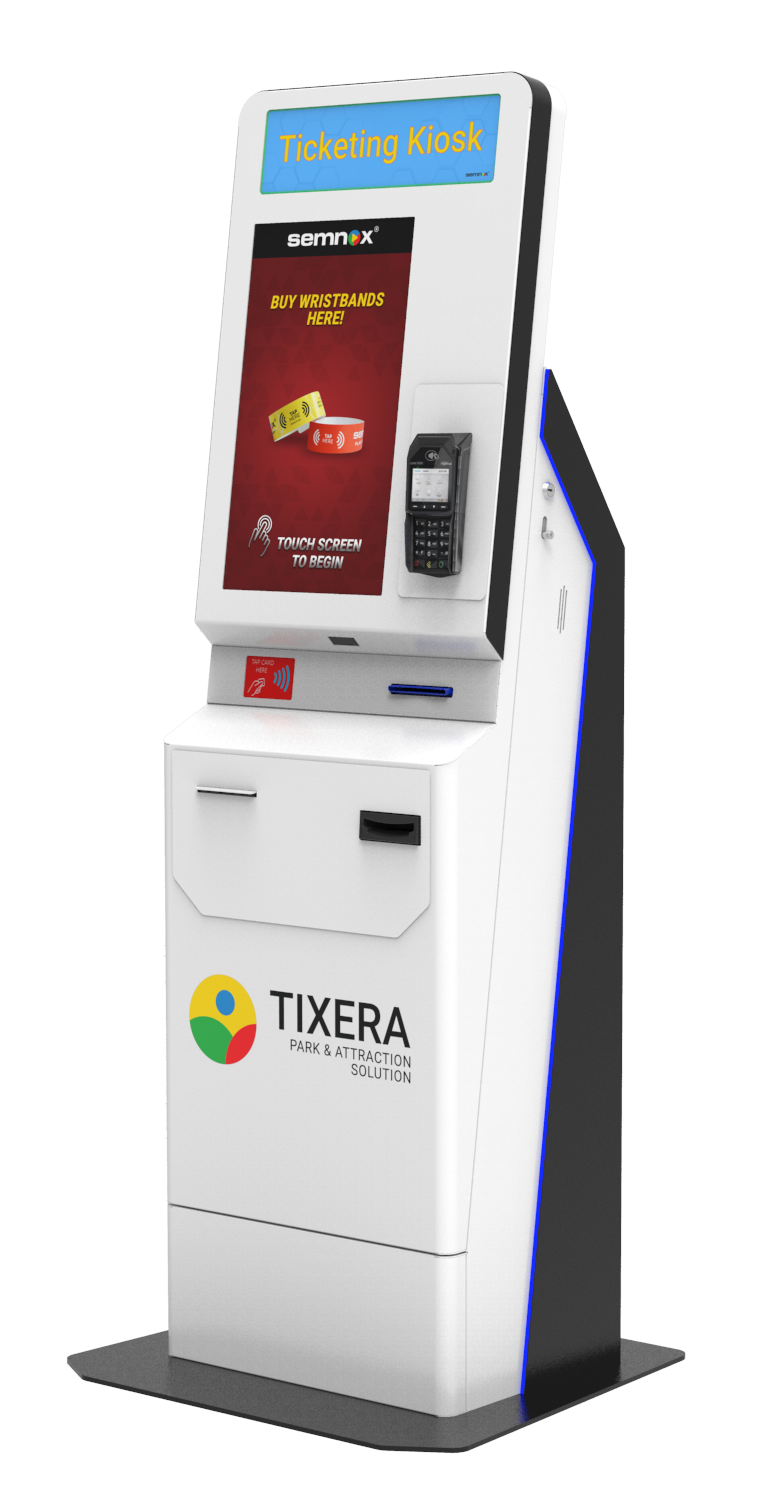
Digital systems improve guest experiences by minimizing queues, enabling online and mobile ticket purchases, allowing seamless cashless payments, and enabling self-service kiosks and wristbands for quick ride access. Guests enjoy personalized offers, easier spending controls, and holistic event engagement, encouraging repeat visits and positive word-of-mouth.
Innovation as a Business Imperative
To thrive, funfairs need to move beyond orthodox token and paper-band models and innovate across all customer touchpoints. Digital transformation helps operators optimize staffing, unlock new revenue streams through bundled packages and upsells, and build meaningful, ongoing customer relationships through communication and targeted loyalty initiatives.
“With the right digital systems, funfair operators can increase their productivity and profitability, while reducing their staffing needs and delivering superior customer service,” Kamath said. “This is where Semnox can make the difference for funfairs, as specialists in digital transformation.”
The Critical Need for Efficient Ticketing and Capacity Management
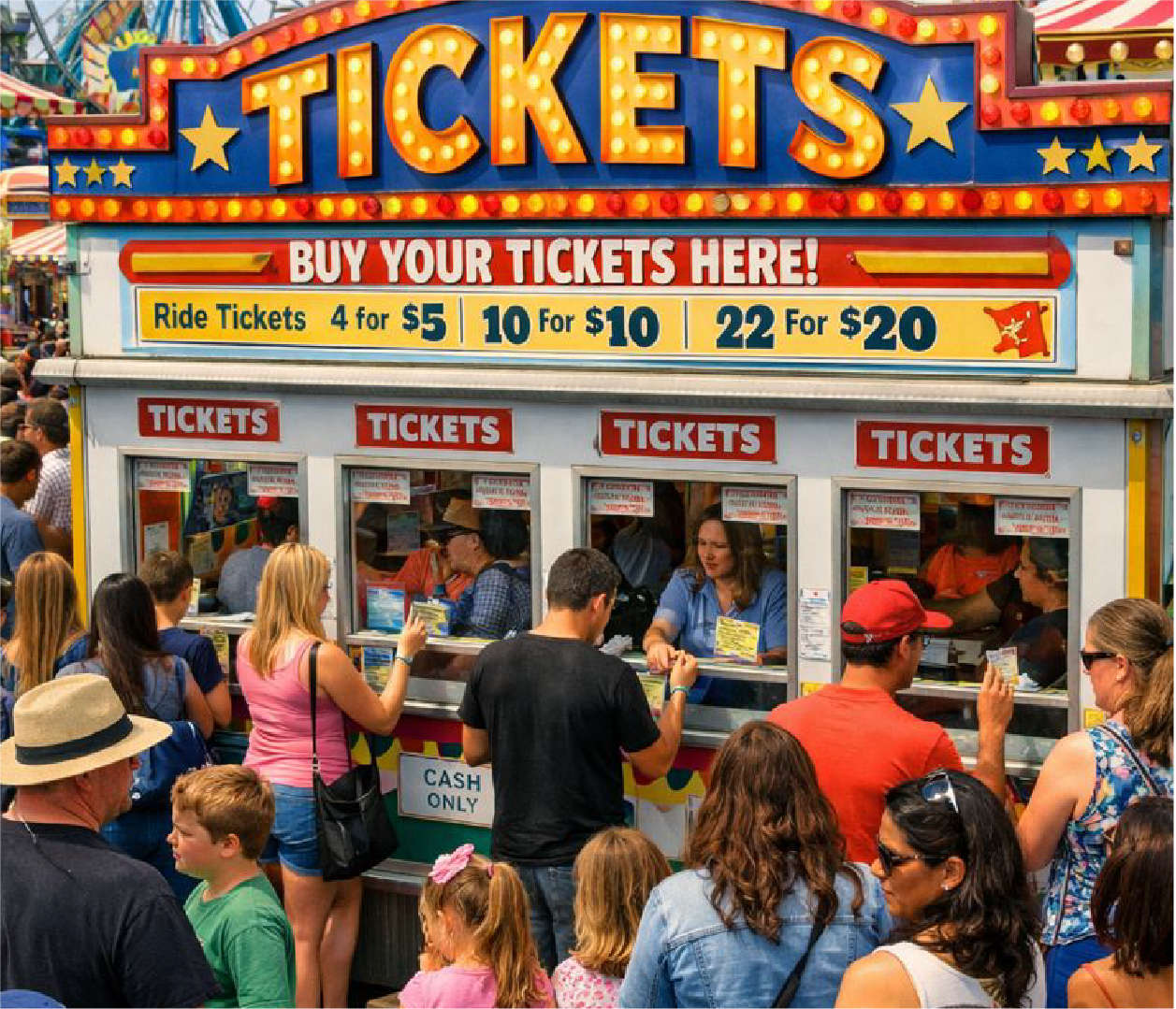 For attractions like funfairs, efficient ticketing and precise slot allocations are essential to managing crowd flow and maximizing visitor satisfaction. Overcrowding or long queues at entrances can quickly diminish guest enjoyment and reduce repeat visits.
No customer wants to spend time waiting in long lines or dealing with outdated counter-based ticket sales, which are slow, error-prone, and unable to provide real-time visibility to operators. Also, traditional ticket booths struggle with handling walk-up and timed-entry ticket sales, managing capacity limits dynamically as guests enter or leave, preventing counterfeiting or duplicate ticket usage, and integrating with other sales activities such as food, merchandise, or ride packages.
Digital Ticketing as a Game-Changer
Mindful of the advantages inherent in digital transformation, modern funfairs and attractions are rapidly adopting digital ticketing systems that use QR codes, RFID wristbands, or barcode-enabled cards. These digital tickets serve as ‘all-in-one’ keys that enable:
- Fast, contactless entry without physical tickets.
- Time-specific reservations and slot management to avoid overcrowding.
- Seamless integration with cashless payment systems across the entire venue.
- Real-time monitoring for operators to track attendance and flow.
- Personalized guest journeys with upsell offers and loyalty tracking.
Through these technologies, funfairs can reduce staffing pressures at ticket counters, speed up guest entry, and improve security and fraud control. At the same time, operators can gather valuable data insights on visitor behavior and preferences, enabling targeted promotions and maximizing revenue potential.
In short, digital ticketing systems align perfectly with the needs of diverse attractions by simplifying:
- Entry and capacity control for shows with fixed seating or sessions.
- Slot reservations for activities with limited spaces like ice rinks or escape rooms. Combined packages offering bundled access to rides, shows, and food outlets.
The result is better-run, more profitable funfairs with less frustrated staff and happier customers who return again and again.
Part Two:
How Semnox is Modernizing the Funfair Industry
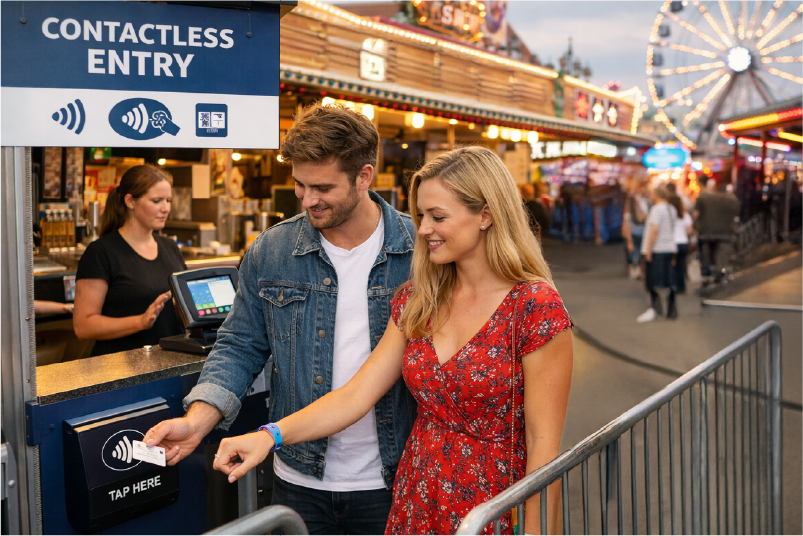 Semnox Solutions stands at the forefront of digital transformation in the funfair and family entertainment sector, offering a comprehensive platform designed specifically to meet the unique operational and guest experience challenges of the modern funfair industry.
Innovative, End-to-End Solutions
Modern funfairs operate with several moving parts — from e-commerce and food & beverage to all-day bands and token-based rides. Semnox is the only platform that brings all these components together in a single, integrated solution. This unified approach allows owners and operators to manage their entire funfair through one system. It also offers visitors a seamless experience using a single card or wristband to access all attractions and services.
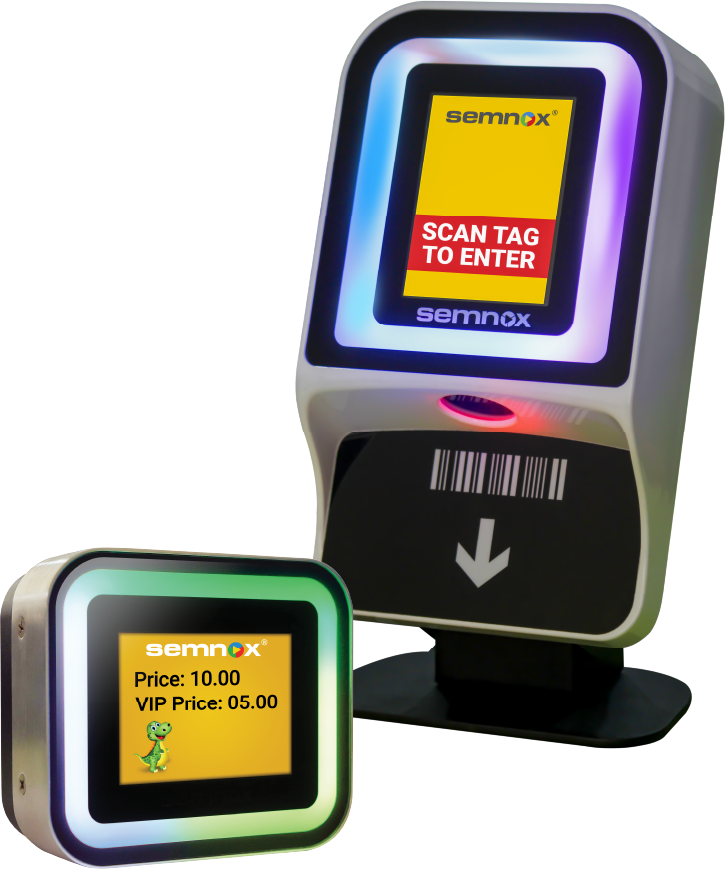 Implementation of cashless systems also gives businesses far greater control and flexibility compared to traditional token-based operations, enabling enhanced revenue management and improved guest engagement. Examples include:
- Introducing dynamic ride pricing based on season, time of day, or weekdays
- Offering time-based packages, such as 4-hour unlimited ride passes, automatically monitored through RFID bands.
- Running cross-promotions across different business units, such as offering a 5% discount on the first coffee with a £100 card purchase.
- Driving repeat visits through initiatives like free entry days or seasonal membership programmes
To make all of this happen, Semnox delivers a robust, integrated system encompassing the full spectrum of funfair operations — from ticket sales and entry to food, beverage, merchandise, and loyalty management. Key components include:
- Point of Sale (POS): Fast, reliable transaction processing across rides, food outlets, and merchandise stalls.
- Cross-plarform operations: start the transaction online, finish at a sales kiosk
- Online Sales: Seamless e-commerce for B2C and B2B ticket purchases, package creation, and mobile top-ups, plus cloud-based POS.
- Digitized management of promotions, sales and revenue reporting
- Self-Service Kiosks: Compact, user-friendly kiosks for card and wristband issuance, ticketing, food and beverage salers, and ticket redemption,, reducing queues and staffing needs.
Industry-Specific Modules
Understanding the nuances of funfair operations, Semnox has developed specialized modules such as:
- Outdoor-Rated Xter RFID IP65-Rated Readers: Designed for weather-resistant, outdoor use in diverse setups for RFID, barcodes, or QR codes.
- Cashless and Contactless Dual Card Processors: Facilitates quick, secure transactions through RFID wristbands, cards, and mobile payments.
- Attraction Booking & Capacity Management: Manages time slot reservations, crowd flow, and capacity limits for rides, circuses, ice rinks, and more.
- Inventory & Redemption Management: Controls food, beverage, and merchandise stock to reduce losses and streamline ordering. Also tracks wins at skill games.
- Table Booking Module: Adds convenience for food and beverage service with reservation options.
“We are doing everything we can to make day-to-day operations as efficient and effective for funfair operators as we can,” said Kamath. “This is why Semnox exists.”
Ease of Use for Owners and Guests
Semnox’s all-in-one platform is designed to be intuitive and manageable for funfair owners, requiring minimal IT infrastructure thanks to its cloud-based architecture. This reduces costly local servers and extensive network cabling, ideal for seasonal and traveling funfair setups. Guests benefit from a smooth, fast, and contactless experience across every touchpoint from purchase to entry and on-site spending.
Local Commitment and Support
With a dedicated office in the UK focused on serving UK and European customers, Semnox provides strong regional expertise and responsiveness. A dedicated project management and support team guides operators through implementation and ongoing optimization to ensure operational success and positive guest experiences.
Proven Track Record and Industry Experience
Semnox boasts over 17 years of industry experience, supporting more than 20 outdoor funfair venues across the UK alone. Operators trust Semnox for its reliable combination of ticketing, cashless payment solutions, food and beverage POS systems, and the ability to scale with industry needs.
Cloud Capability and Scalability
Semnox’s cloud-first platform allows multi-venue owners to centrally manage operations, gain insights through reporting, and adapt quickly to changing customer demands and operational challenges. This reduces manual workload and empowers operators to focus on marketing, guest engagement, and growth.
Continuous Innovation
Semnox remains committed to evolving with the funfair industry, continuously innovating and releasing new features responsive to market trends. This includes enhanced mobile validation apps, improved integrations with payment gateways like Adyen, and expanded loyalty and CRM capabilities to support personalized guest engagement.
Together with its comprehensive, funfair-tailored solution and strong support presence, Semnox is uniquely positioned to enable operators across the UK and Europe to digitize, streamline, and modernize their funfair operations — boosting efficiency, enhancing guest experiences, and growing revenues in a competitive landscape.
The Bottom Line: Optimized Funfair Operations and Profitability
From their earliest days in the 12th century until now, UK and European funfairs have shown tremendous adaptability and resilience in changing with the times. Today, digital transformation is at the heart of modern funfair relevance and continued success, and Semnox is here.
“We are here to help the funfair industry thrive and grow into the next 900 years and beyond,” said Vinayaka Kamath. “Whatever your needs, Semnox is there for you, and we are as easy to reach as clicking on our website at www.semnox.com.”
Find out why hundreds of venues trust us to automate, scale and delight.
www.tixera.com | tixera.sales@semnox.com
FAQs
1. What does digital transformation mean for UK and European funfairs?
It refers to adopting technologies like digital ticketing, cashless payments, and data-driven systems to improve operations and guest experience.
2. Why are traditional funfairs in the UK and Europe going digital?
To reduce cash handling, manage crowds better, increase transparency, and meet modern visitor expectations.
3. How is cashless payment changing funfair operations?
Cashless systems speed up transactions, reduce queues, and minimize revenue leakage across rides, games, and food stalls.
4. What digital ticketing options are used in modern funfairs?
QR codes, RFID cards, wristbands, and mobile tickets are commonly used for entry and ride access.
5. What challenges do funfairs face when going digital?
Common challenges include initial setup, staff training, and connectivity, which are manageable with the right platform.

A forward-thinking product strategist, Vinayaka Kamath brings over a decade of hands-on experience in building scalable, intuitive solutions for the global entertainment and leisure industry. Known for blending user-centric design with robust backend technology, he plays a key role in shaping the Parafait product suite at Semnox.
As the Product Head for Parafait, Vinayaka leads innovation across a wide spectrum—from self-service kiosks and cashless systems to real-time operational intelligence. His deep technical knowledge and cross-functional leadership ensure that every product evolution aligns with the needs of amusement parks, FECs, waterparks, and arcades around the world. Vinayaka continues to drive Parafait’s mission of delivering frictionless, all-in-one venue management experiences.