
Connected Operations: The New Backbone of Midway & Regional Parks
Executive Introduction
Running a midway or regional park today is more operationally complex than ever before. Operators face a growing list of challenges, ranging from seasonal staffing shortages to rapidly rising guest expectations for speed and convenience.
In the past, localized ticketing and redemption systems were often fragmented, causing compounding inefficiencies across the property. Today, however, technology has fundamentally shifted from being a “support tool” to serving as the absolute core operational infrastructure of the park.
The key to success is selecting the right technology for the job.

Understanding the Modern Midway and Regional Park Segment
To address the operational complexity-and to select the right technology-operators must first define the unique environment of the Modern Midway and Regional Park market segment. This market includes boardwalks, beachside attractions, regional parks, piers, and seasonal amusement operations. These venues are different from destination theme park giants like Disney or Universal. Instead of relying on global tourism, they sell themselves as “local heroes” relying heavily on repeat, multi-generational local visitors to drive their businesses.
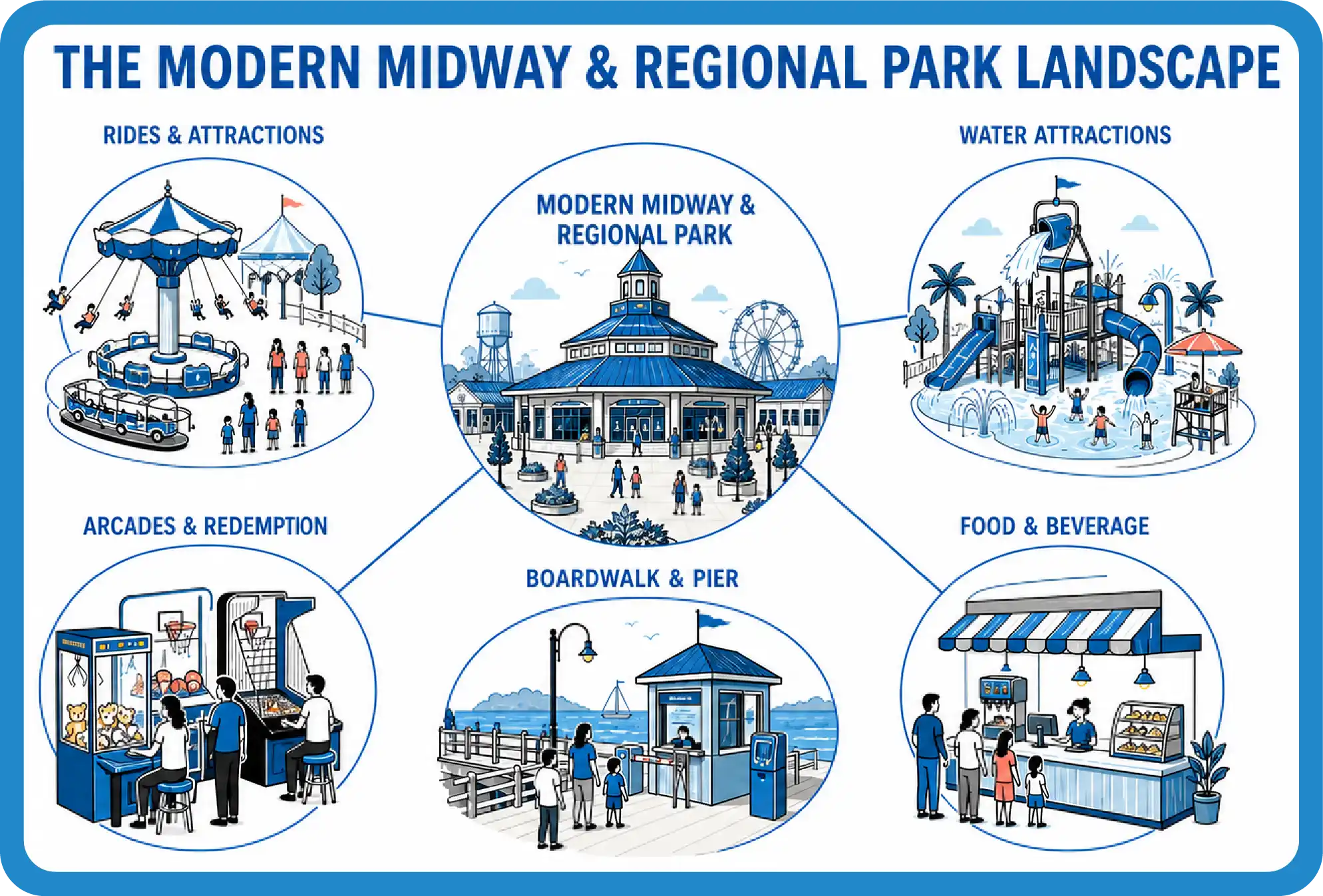
The complexity of these parks lies in their diverse mix of arcades, water attractions, rides, food and beverage (F&B), and midway games. Managing this mix successfully requires highly tailored strategies because modern midways and regional parks must earn the vast majority of their annual revenue within a few peak months. As a result, any operational downtime or system friction during summer spikes has an amplified negative impact on the bottom line.
Additionally, managing such multi attraction environments requires operators to simultaneously oversee completely different business types—such as redemption arcades, mechanical rides, waterparks, and traditional carnival games—each demanding unique access control and transactional parameters. Because these parks rely on the surrounding community, cultivating local, repeat visitors is critical to long-term success.
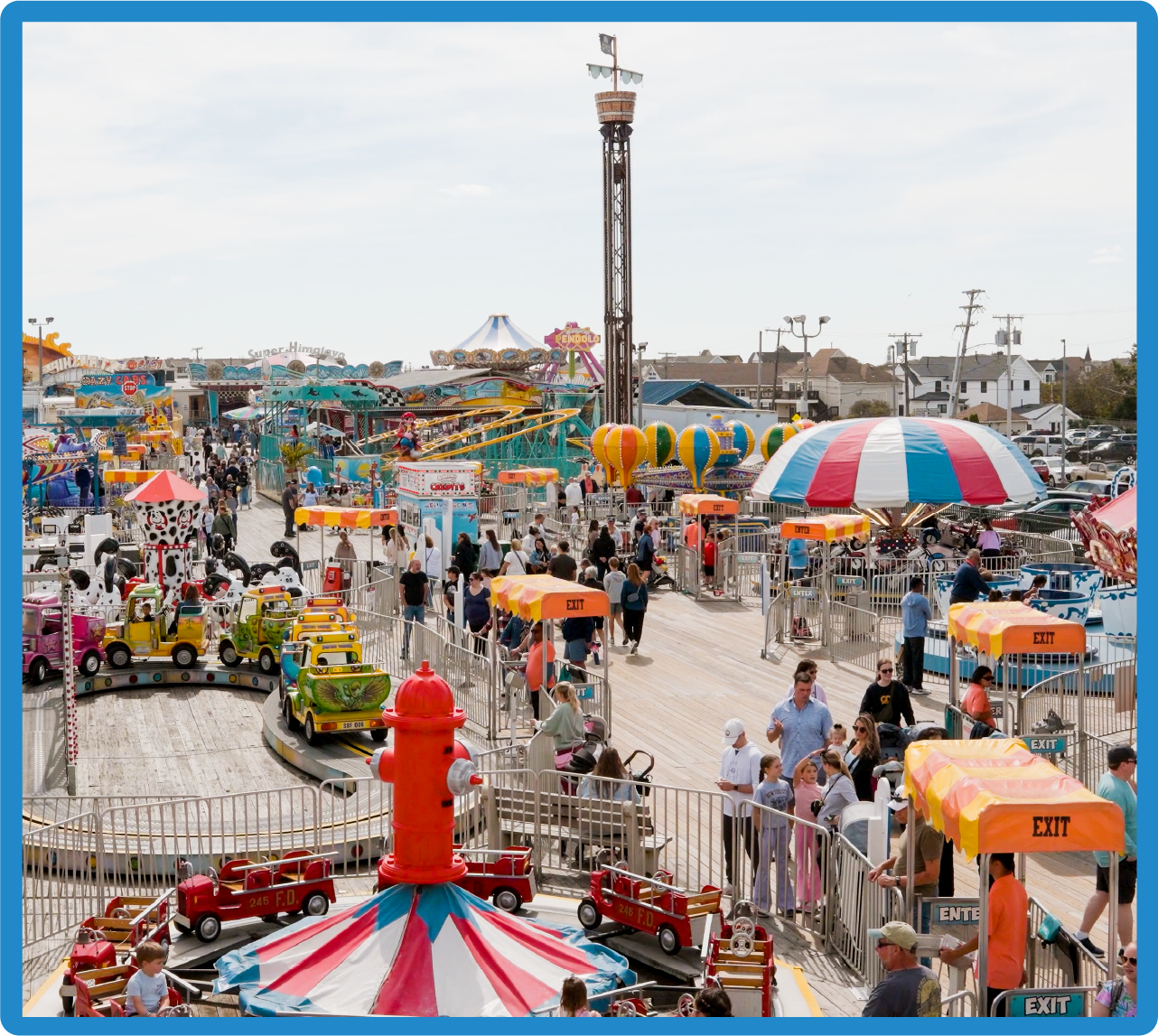
Operators must also select transactional systems capable of surviving sudden, massive surges during summer weekends. During such rushes, a lag in point-of-sale (POS) systems can quickly result in devastatingly long lines and lost revenue. Finally, mitigating outdoor exposure to POS systems is an ongoing battle. Operating directly on piers or coastlines with harsh sun, rain, wind, salt air, and sudden storms requires specialized infrastructure that keeps running even when the weather turns. Prime examples of regional attractions successfully navigating these environmental and operational hurdles include Jenkinson’s Boardwalk, Casino Pier, and Race City.
Market Snapshot
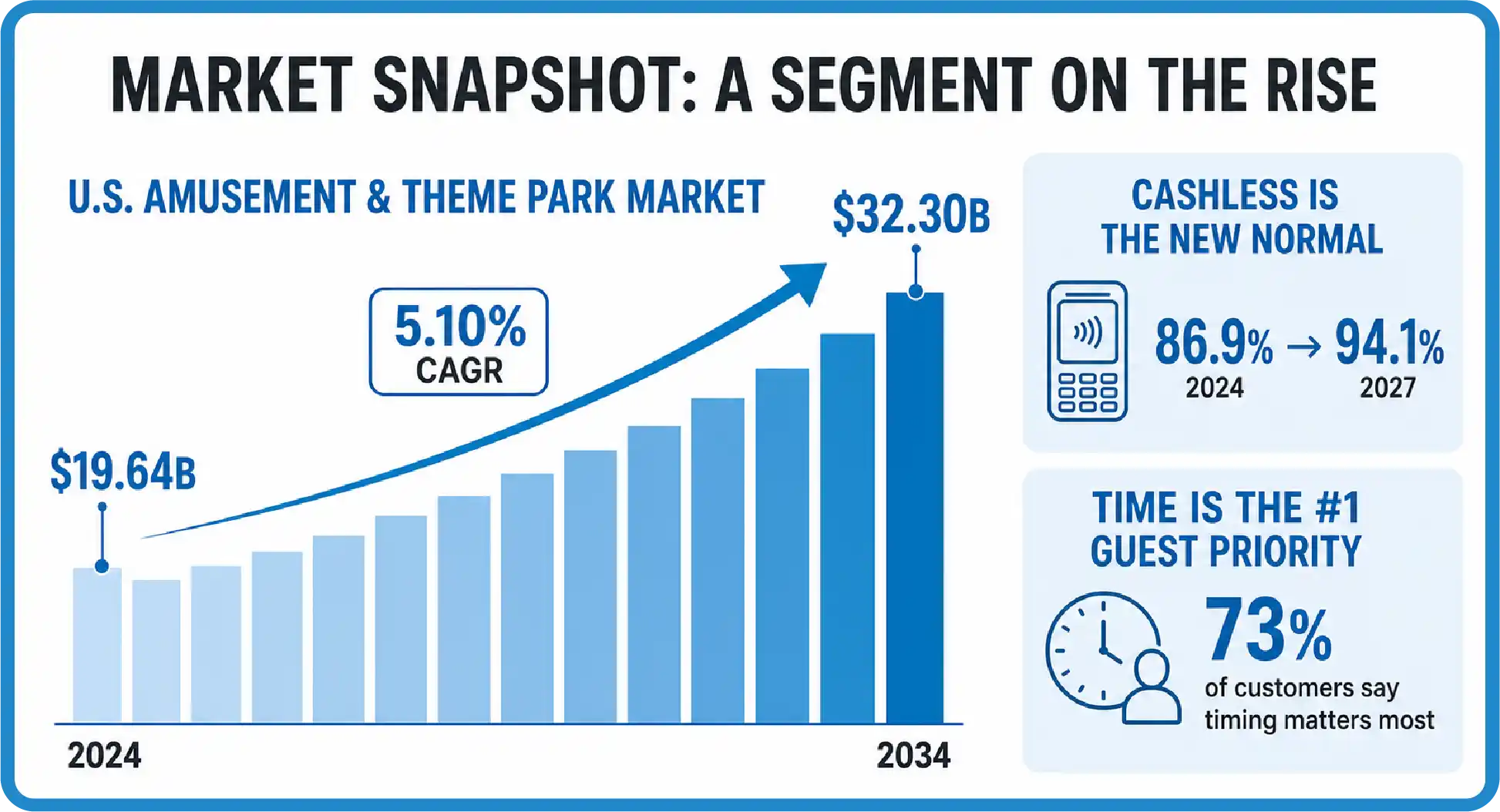 Despite these operational hurdles, the Modern Midway and Regional Park segment is showing consistent growth. According to the U.S. Amusement and Theme Park Market Report published by Expert Market Research, the domestic market was worth about $19.64 billion in 2024 and is projected to reach $32.30 billion by 2034, reflecting a steady compound annual growth rate (CAGR) of 5.10%. While large theme parks do capture significant revenue, Expert Market Research noted that the demand for regional park staples, such as rides and water attractions, is trending upward due to their broad community appeal and strong operational viability.
This financial growth coincides with a near-complete transition toward cashless transactions across the country. Data published by Cheqly in their Cashless Payments in the US report indicate that an estimated 86.9% of all U.S. point-of-sale transactions were cashless in 2024, with expectations to reach 94.1% by 2027.
Simultaneously, today’s park visitors now demand a “Smart Park” experience that doesn’t waste their time above all else. In fact, a Peach Prime Consultancy study on Theme Park Design Trends reveals that 73% of customers state that valuing their time is the single most important factor in providing good customer service. Furthermore, they have a high demand for personalized journeys, including RFID wristbands for seamless entry and custom F&B recommendations based on past behavior. Real-time updates via apps, such as wait times and mobile ordering, are also a standard expectation for Gen Z and Millennial visitors, who make up the largest demographic base.
On top of these technological shifts is a growing labor crisis, as staffing remains the number one operational hurdle for regional operators. The International Association of Amusement Parks and Attractions (IAAPA) in its global survey identifies workforce constraints and economic uncertainty as the top two challenges facing operators. To survive staffing shortages, major operators are aggressively pivoting to automation. Jenkinson’s Boardwalk, for example, successfully reduced its arcade staffing requirements by roughly six positions simply by moving to a ticketless self-service kiosk system. Industry data from Mordor Intelligence’s Amusement Parks Market Report warns that without efficiency-driving technologies like these, rising operational expenses from labor inflation will lead to a projected negative impact on CAGR for lagging operators.
The Hidden Operational Reality
As operators combat rising guest expectations, labor shortages and rising costs, the importance of technology to their operations becomes impossible to ignore. As the industry mantra goes: “Your System Is Your Most Dependable Team Member.”
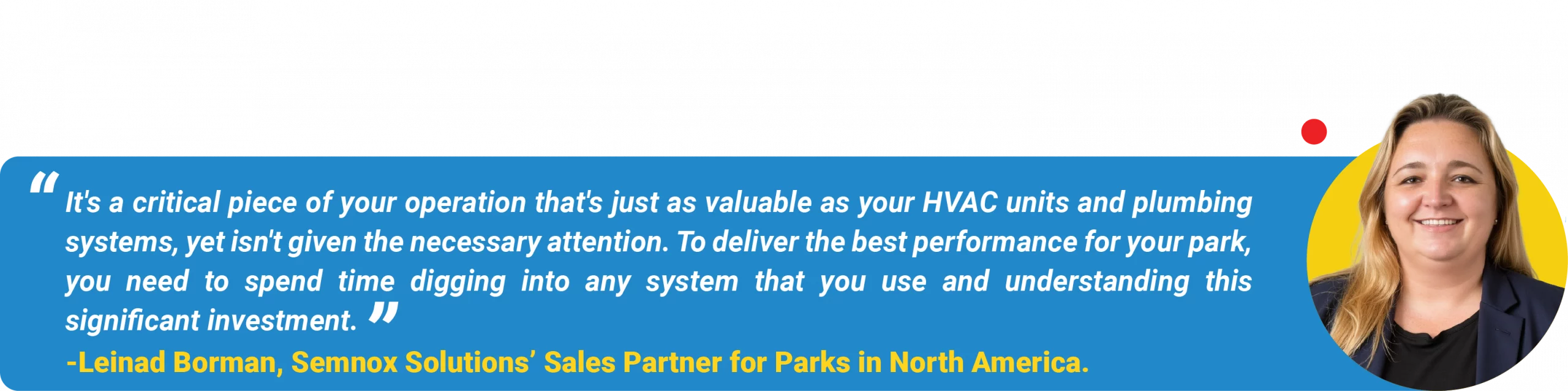
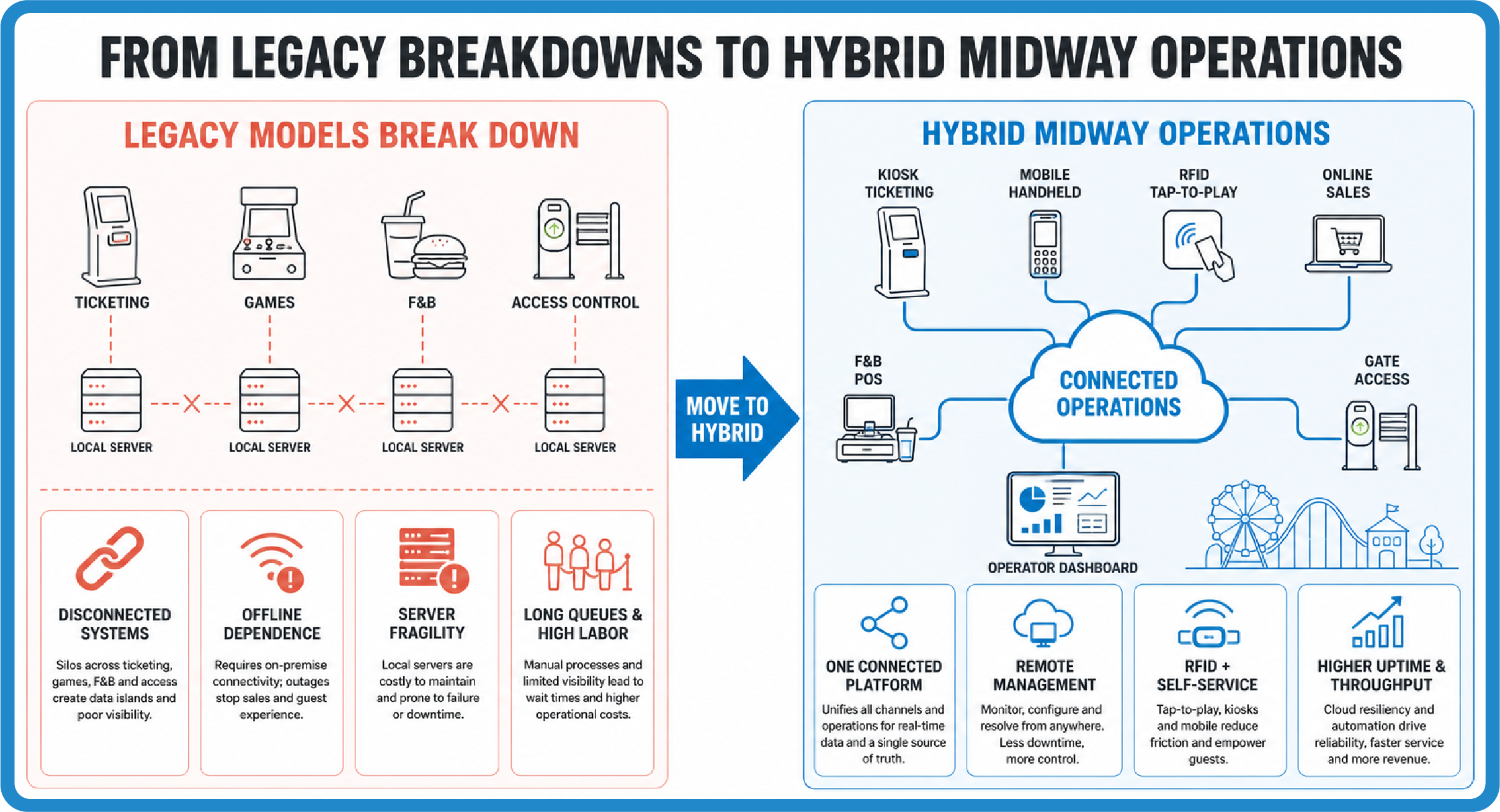
When this infrastructure is poorly integrated at an amusement operation, critical pain points can multiply across the midway. It begins with the chaos of disconnected platforms and operational blind spots. Relying on separate databases for the games, ticketing gates, and F&B counters isolates crucial data, creating permanent blind spots that prevent management from seeing a guest’s total daily spend. This hidden operational reality creates long lines, forcing guests to wait in multiple queues—first to buy a ticket, then to get cash converted, and finally at the attraction—unnecessarily wasting their time while burning out front-line labor.
Finally, these outdated systems suffer from extreme hardware fragility. Standard off-the-shelf POS hardware frequently fails due to weather-related wear, while offline-heavy or server-dependent networks can bring an entire park’s operations to a grinding halt if a single local server drops connection.
The Evolution of Midway Technology
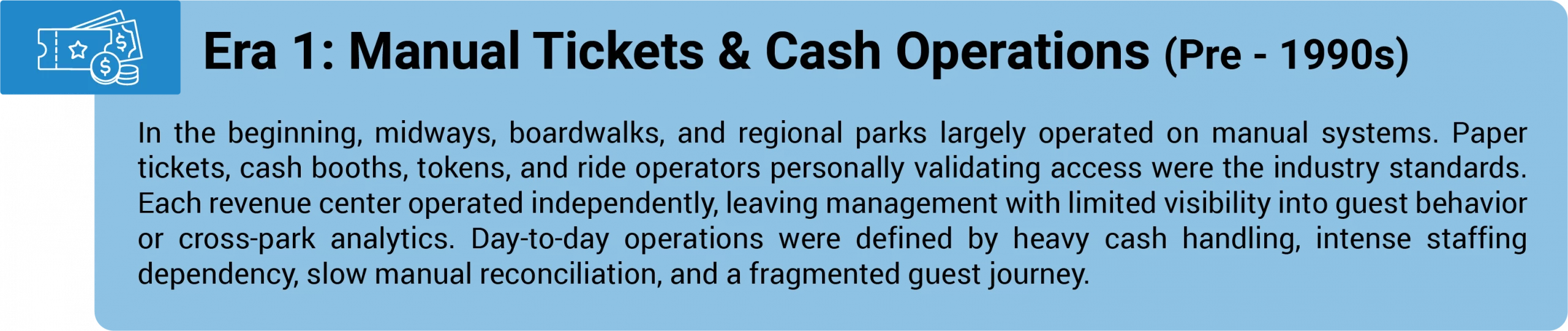
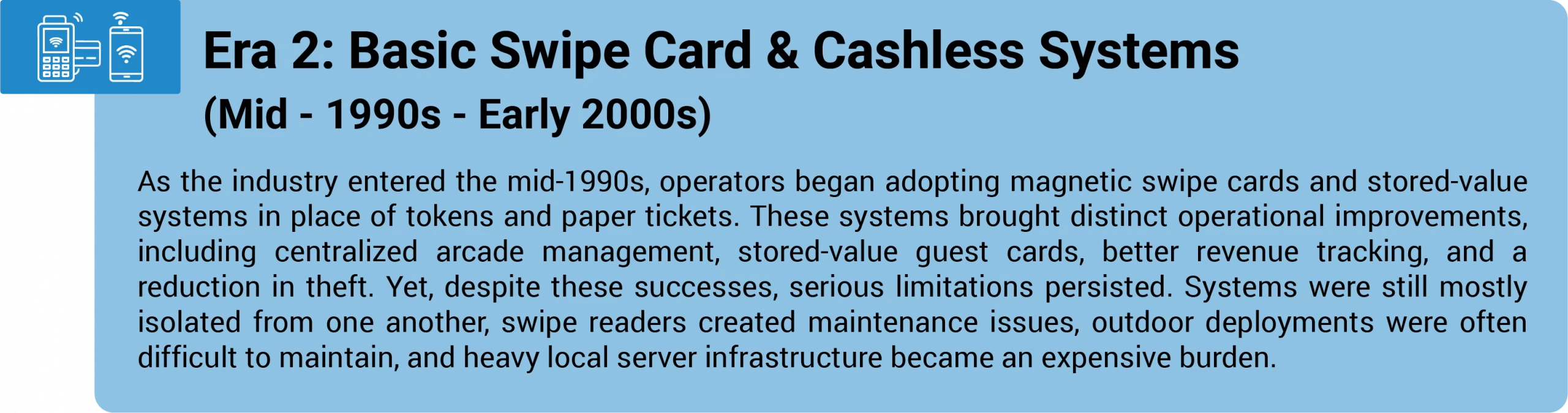
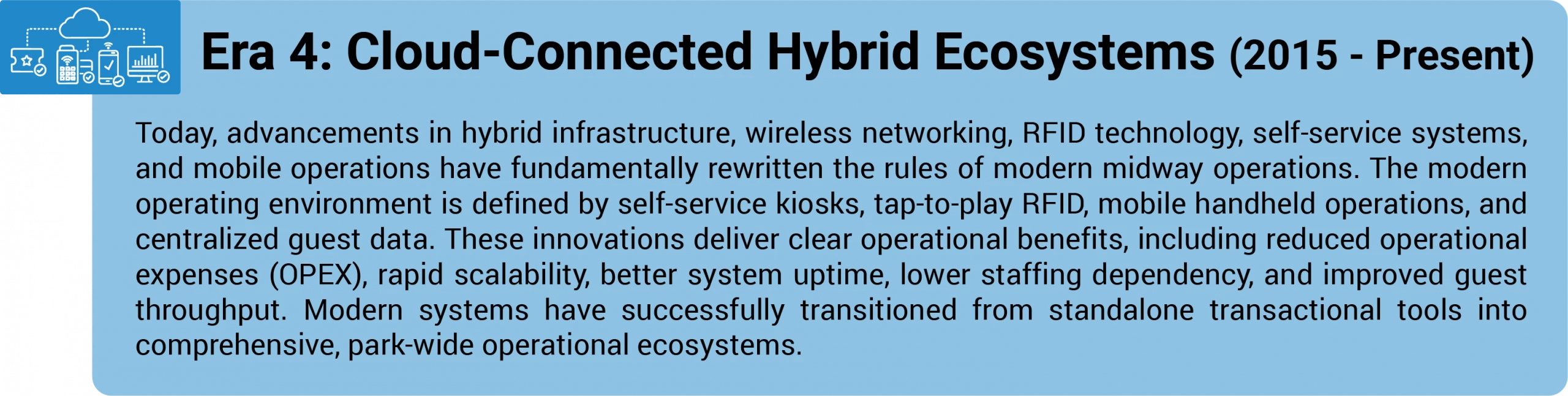
To fully appreciate why these legacy vulnerabilities exist today, it makes sense to review how midway technology has evolved alongside changing guest expectations and operational demands.


Why Legacy Operational Models Are Breaking Down
While the industry at large has entered the era of cloud-connected ecosystems, many individual parks remain tethered to the disconnected digital operations of the past. Legacy models suffer from aging networking architecture, offline-heavy bottlenecks, and risky server dependencies. Upgrades to these old systems are notoriously difficult, while maintenance overhead drains profits and scaling to meet new operational demands presents a constant, frustrating challenge.
The Rise of Hybrid Midway Operations
To escape these legacy limitations, the amusement/attractions industry is increasingly embracing hybrid midway operations. Hybrid cloud models eliminate the single points of failure found in older server dependent models, enabling seamless updates, remote management, and significantly better system uptime.
Enabling the Modern Midway: The Operational Ecosystem
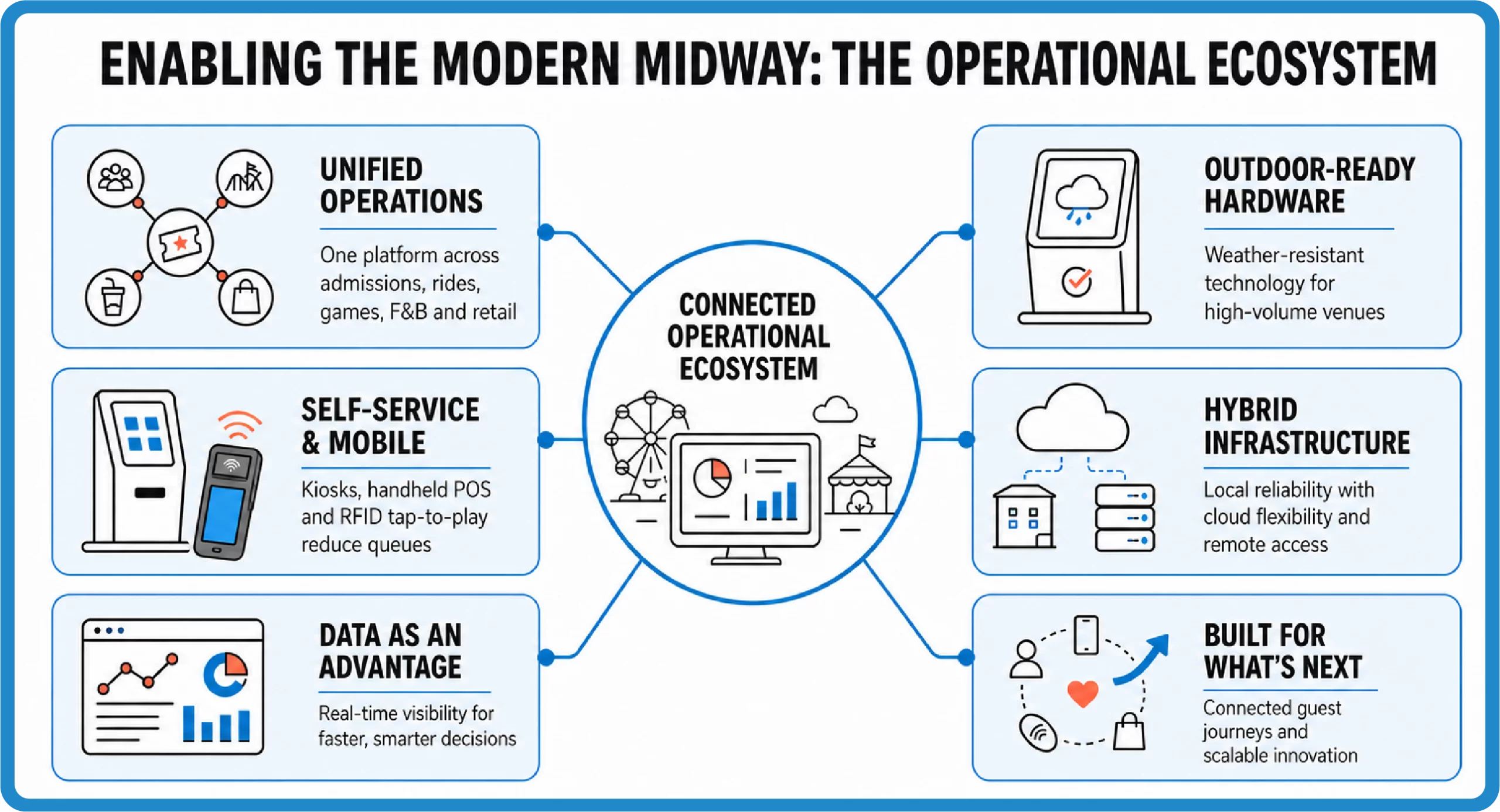
Because of this shift, modern regional parks, piers, and midway venues require much more than a standalone cashless swiper. They now need connected platforms that can unify guest experiences, reduce labor, simplify deployment, and support outdoor environments with unwavering reliability. This demand has driven the emergence of fully integrated operational ecosystems, such as Tixera by Semnox.
Unified Operations Across Attractions
Modern midway venues are complex, often running admissions, rides, games, F&B, retail, and e-commerce at the same time. Operators benefit most when these functions work together as one connected layer across the property. Tixera supports this model through a unified cashless ecosystem that brings F&B, access control, online modules, and centralized reporting into a single database. The result is the operational ideal: One Card, One Guest Journey, One System.
Built for Outdoor & High-Volume Environments
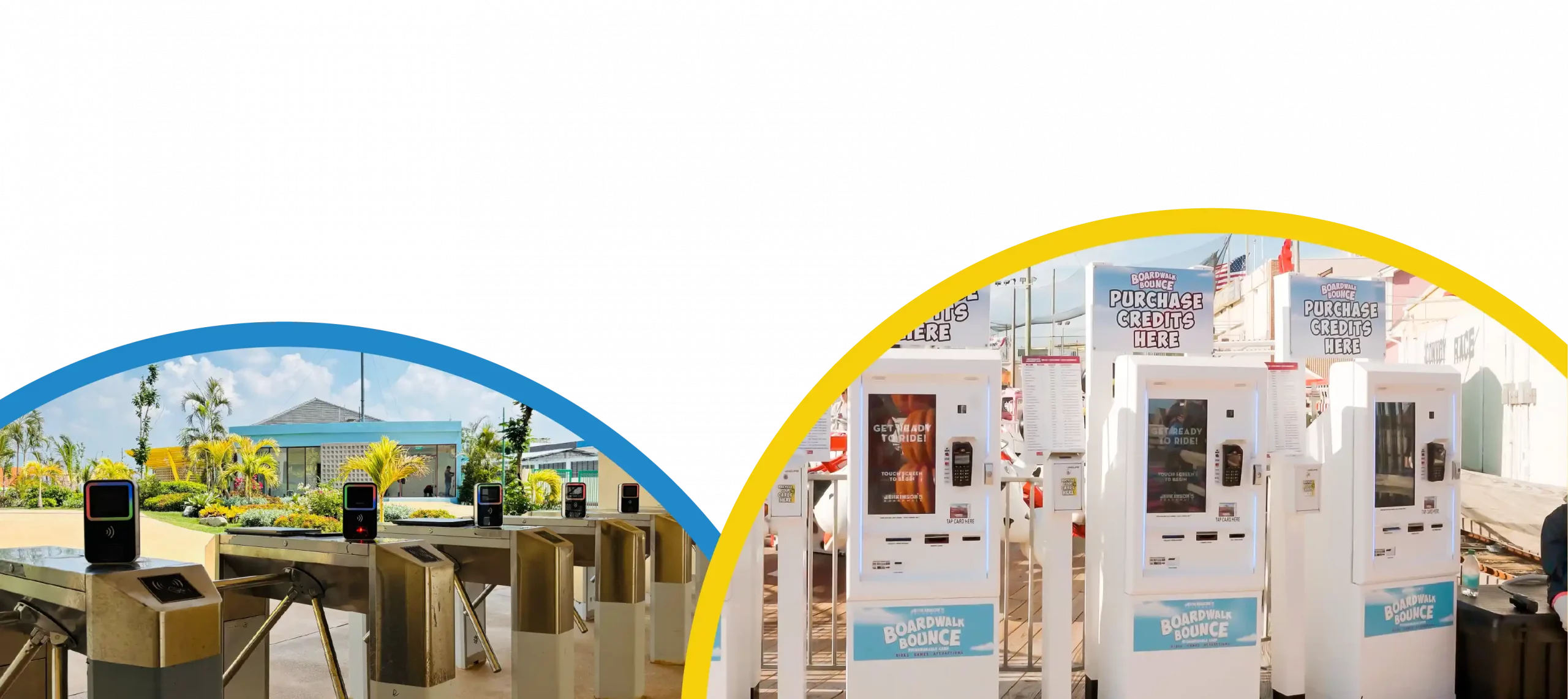
Of course, any unified system is useless if the hardware cannot survive extreme weather conditions. This is why Tixera offers all-weather IP65-rated readers designed to resist dust, intense humidity, and direct water exposure, to maintain instant tap-to-play execution at highly exposed beachfront locations.
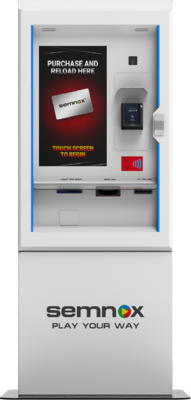
Additionally, Tixera offers high-traffic outdoor kiosks featuring ultra-bright screens that remain perfectly legible under direct afternoon glare. These are encased in commercial-grade, insulated enclosures that stand up to both coastal salt air and continuous guest usage. To simplify park-wide installation, these Tixera kiosks support wireless deployment flexibility, using secure, high-speed wireless mesh protocols to connect remote midways effortlessly without the need to cut concrete or lay miles of complex underground data cabling.
The Rise of Self-Service and Mobile Operations
Driven by changing labor markets and heightened guest expectations, park layouts are moving their services directly to where guests gather. This is being done using unattended kiosk systems that serve standard ticketing, card reloading, and balance checks through smart self-service terminals. Doing so allows parks to automate transactions, immediately shortening main gate queues, and redistributing scarce human labor to higher-value tasks.
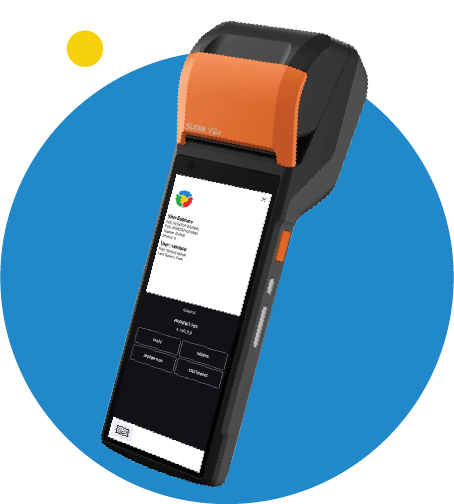
Parks are also arming their staff with handheld POS and mobile validators, allowing them to process admissions at the front gate during sudden surges or manage entries at temporary outdoor events on the fly. This mobility is paired with instant RFID tap-to-play readers that replace high-maintenance swipers. This upgrade reduces wear-and-tear, speeds up transaction times, and provides a highly satisfying digital experience for guests.
“Guests might swipe three, four, or five times to activate a game once,” said Borman. “If that’s the consistent behavior, they’re going to get frustrated and that frustration can be a detriment to even deciding if they want to visit again in the future. As well, RFID cards and wristbands do increase guest spending. Arcades have seen an uptick in recharges because the tap makes it that much easier for the guest to enjoy themselves.”
Hybrid Infrastructure for Modern Parks
Hybrid infrastructure combines local, on-site hardware with internet-based cloud computing. The cloud component allows park managers to remotely access real-time data, update pricing, and manage operations from anywhere. The local hardware ensures that rides, arcades, and point-of-sale terminals can continue functioning seamlessly even if the park loses its internet connection. Once the connection is restored, all those offline transactions automatically sync up to the cloud, giving operators the perfect blend of remote flexibility and bulletproof reliability.
 Semnox’s Tixera platform provides a highly connected architecture with robust hybrid operational capability, making it easy to deploy in seasonal operations. This platform ensures remote visibility for owners, simplifies off-season updates and maintenance, and decreases long term costs to operate.
Data as an Operational Advantage
When a park’s digital operations are unified, they give operators a clear “Big Picture” view of guest spending, attraction usage, throughput, and repeat visitation patterns. By serving as a single source of truth, platforms like Tixera deliver centralized analytics and real-time dashboards to help management make appropriate data-driven decisions on the fly.
Designed Around the Direction of the Industry
The entertainment industry is embracing connected guest journeys, unified operational ecosystems, cloud-driven flexibility, self-service engagement, mobile-first operations, and deep operational intelligence. Platforms like Tixera are a core part of this broader evolution, by helping midway and regional park operators modernize infrastructure safely without losing the flexibility and local personality that make their venues special.
Real-World Operator Perspectives
The theoretical benefits of a unified Tixera operational ecosystem are best proven by the real-world experiences of operators managing high-volume, weather-exposed environments. Recent deployments at two iconic Jersey Shore destinations illustrate the impact of this modernization.
Jenkinson’s Boardwalk:
Modernizing While Preserving Guest History
Jenkinson’s Boardwalk needed to modernize their entire tech infrastructure while retaining the loyalty of their multi-generational visitors during this transition. Semnox’s Tixera-driven solution made this happen. It seamlessly migrated over eight million legacy guest accounts into a new unified system, making Jenkinson’s the first Semnox location to use card conversion software directly at unattended guest kiosks.
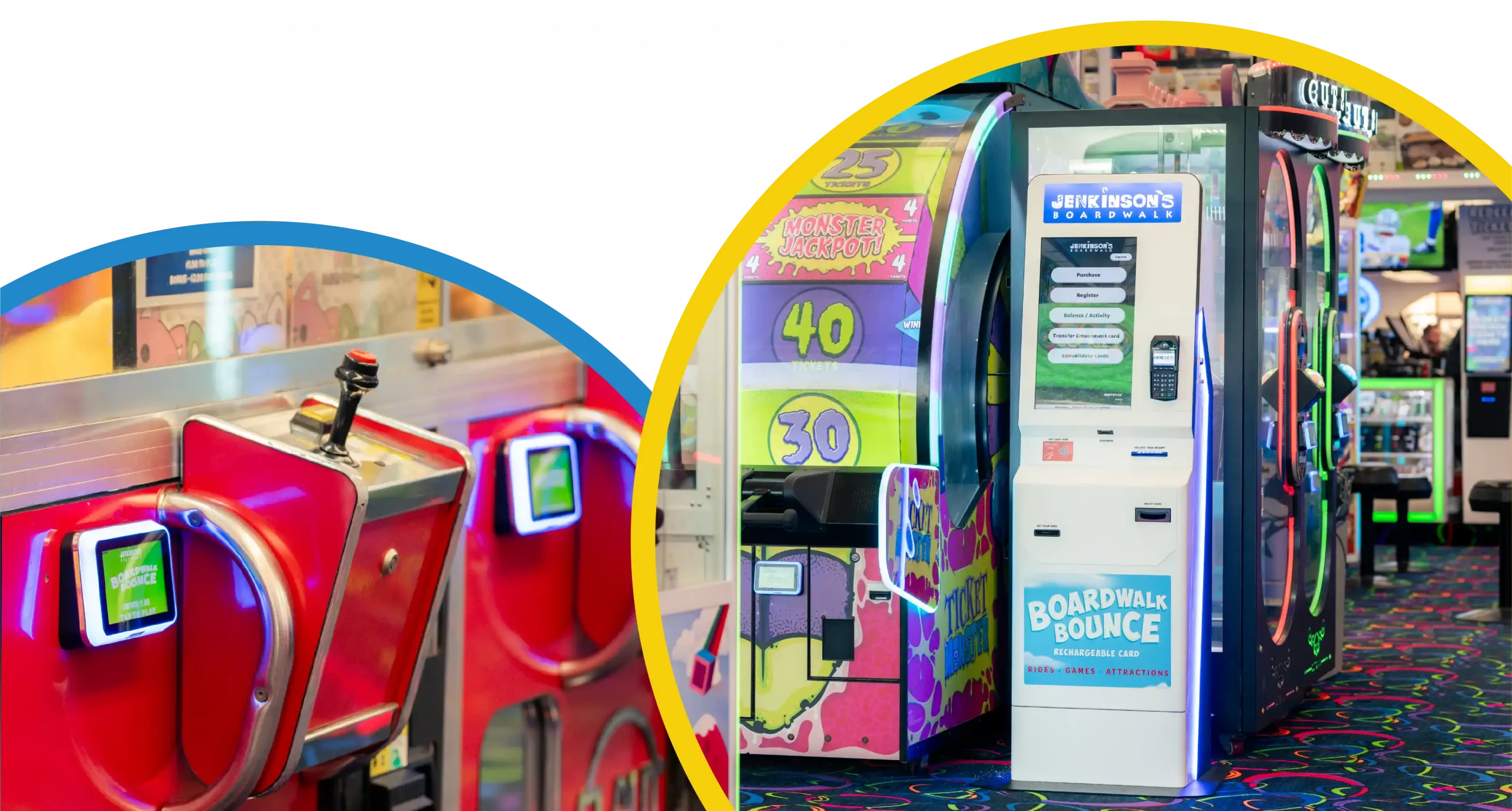
 For guests, the process is painless. They simply scan their older, legacy Boardwalk cards at an automated kiosk. The Tixera-backed kiosk identifies their account, accesses their historical balances, merges funds from multiple accounts if requested, and then issues a freshly activated RFID card on the spot without staff intervention.
Supporting this frontline transition is an outdoor hardware network deployed strategically across high-exposure areas like the Boardwalk rides and batting cages. Here, 10 Semnox Klimate Outdoor Kiosks and 35 XcessOS readers operate reliably under harsh coastal conditions. XcessOS readers also give operators the rare power to process four distinct price points on a single compact reader.
Additionally, Jenkinson’s introduced arcade prize automation via KlaimPrize Kiosks directly within their redemption centers. This upgrade allows winning guests to scan their cards, browse their point values, and cleanly execute their prize choices autonomously, freeing staff to focus on other operational tasks.

Casino Pier & Breakwater Beach: Unified Operations Across Pier and Water Attractions
Further down the coast, Casino Pier and Breakwater Beach in Seaside Heights required a weatherized technology platform capable of unifying the guest experience across two completely distinct park types. And that’s what happened: Following their recent rollout, Casino Pier became one of the first U.S. locations to integrate Semnox’s Tixera solution simultaneously across both their amusement pier and their water park.
To survive continuous exposure to airborne salt water, high winds, and intense beachfront heat, the property installed nine high-durability Klimate Outdoor Kiosks paired with more than 30 weather-rated XcessOS readers. The weatherproof units offer ultra-bright 1600 NIT sunlight-readable touchscreens and specialized jam-resistant internal printing systems.
 This stationary infrastructure is supported by mobile team members with handheld KwickFun POS tools. These staff members can handle everything from roaming park ticket validation to full on-the-fly midway game transactions, regardless of where the guest may be.
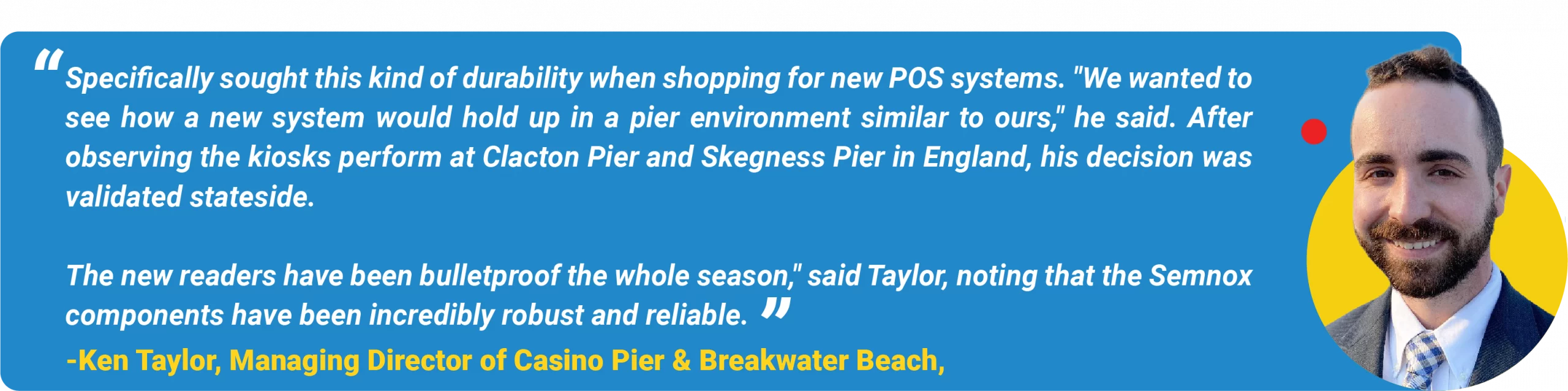
Ken Taylor, Managing Director of Casino Pier & Breakwater Beach, specifically sought this kind of durability when shopping for new POS systems. “We wanted to see how a new system would hold up in a pier environment similar to ours,” he said. After observing the kiosks perform at Clacton Pier and Skegness Pier in England, his decision was validated stateside. “The new readers have been bulletproof the whole season,” said Taylor, noting that the Semnox components have been incredibly robust and reliable.
Closing Perspective
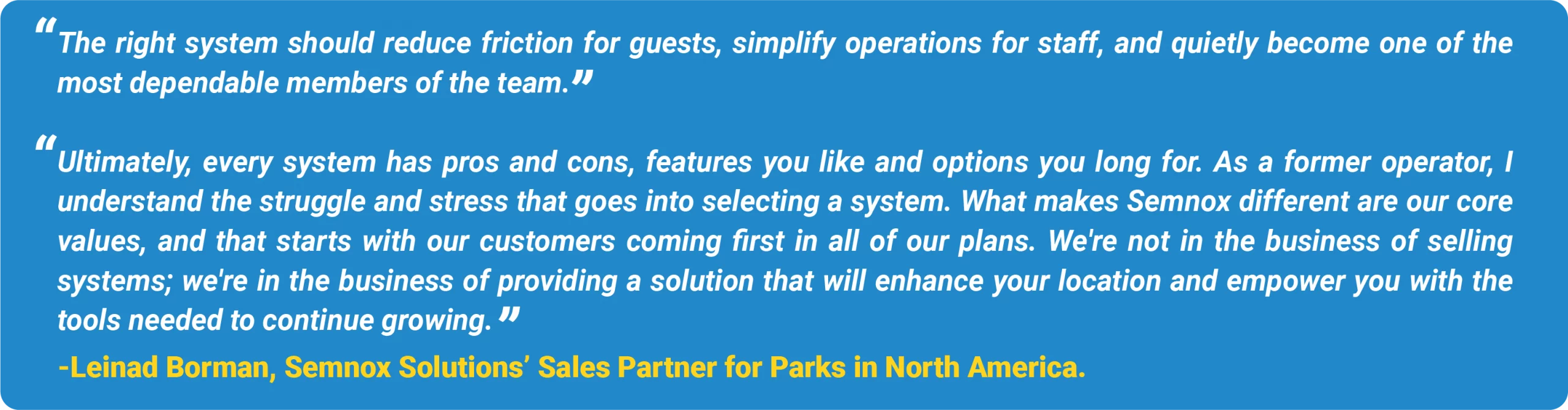
To put all of this in context, Leinad Borman offers this final reflection on technology from her dual perspective as both a vendor partner and a lifelong park operator:
Frequently Asked Questions
1. What are connected operations in midway and regional parks?
Connected operations integrate ticketing, POS, cashless payments, access control, food & beverage, retail, and reporting into a single unified system, giving operators one centralized platform to manage park operations and the guest journey.
2. Why are connected operations important for regional park operators?
They help reduce operational complexity, improve guest experiences, lower labor dependency, eliminate data silos, and provide real-time visibility across all attractions and revenue centers.
3. How does a unified park management system improve the guest experience?
A unified system enables one card or wristband for rides, games, food purchases, and other attractions, reducing queues and creating a smoother, faster guest experience.
4. Can connected operations help address staffing shortages?
Yes. Self-service kiosks, mobile POS devices, and automated cashless transactions reduce the need for manual staffing while allowing employees to focus on higher-value guest interactions.
5. What role do self-service kiosks play in connected park operations?
Self-service kiosks allow guests to purchase tickets, reload RFID cards or wristbands, and complete transactions without staff assistance, improving throughput and reducing wait times.

With a strong foundation in client relations and solution-oriented sales, Leinad Borman plays a crucial role in expanding Tixera’s footprint across the global attractions and leisure industry. His ability to align customer needs with scalable technology makes him a key player in Semnox’s growth strategy.
At Tixera, Leinad focuses on delivering end-to-end ticketing and visitor management solutions for amusement parks, waterparks, cultural attractions, and leisure venues. His commitment to building long-term partnerships and driving business value ensures that clients receive not just a product—but a strategic solution that transforms the guest experience.