
Managing Multiple Attractions Under One System: A Midway Park Challenge
The Unique Complexity of Midway Parks
Most amusement industry software is built with one kind of venue in mind. A midway park rarely fits that mold.
Unlike a traditional amusement park or an indoor family entertainment center, a midway park usually combines several distinct attraction types under one operation: outdoor rides, indoor arcades, skill games, family attractions, food and beverage outlets, retail stores, seasonal attractions, and event spaces, sometimes all on the same footprint, sometimes spread across several acres.
Each of those pieces tends to run its own way. A ride might sell single tickets. An arcade runs on credits. A retail counter needs standard point of sale. Staffing looks different behind each counter, and so does the pricing logic behind each transaction.
None of that is visible to the guest walking through the gate. They just expect one seamless visit.
The challenge isn’t managing attractions individually. Most operators already do that well. The harder problem is managing all of them as one connected ecosystem, so a guest experiences a single park rather than a collection of separately run businesses that happen to share a parking lot.
The Problem: Technology Silos Everywhere
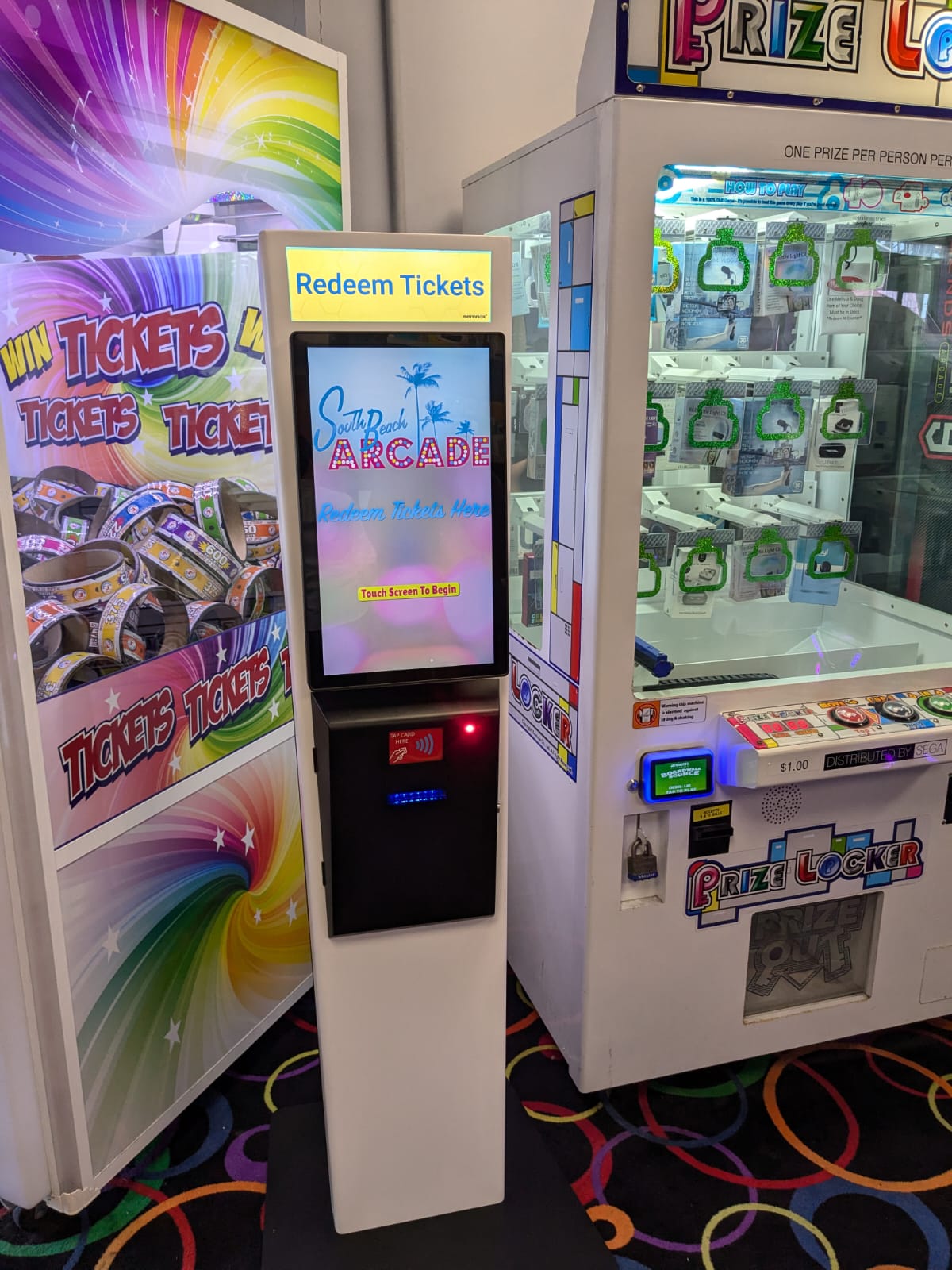
Few midway parks are built all at once. They tend to grow in stages, and each new attraction often arrives with its own system attached. Over a few years of expansion, it’s common for an operator to end up running separate platforms for ticketing, arcade management, point of sale, ride access, lockers, memberships, and online bookings, each purchased at a different point for a different reason, and rarely designed to talk to one another.
The common challenges that come out of this pattern tend to look familiar to anyone running a midway park:
- Multiple payment methods, which cause confusion at the counter and longer queues behind it
- Fragmented guest data, which limits personalization and makes it harder to understand who’s actually visiting
- Operational inefficiencies from reconciling transactions and pulling together reports from several unrelated systems
Q: If each system works fine on its own, why does it matter that they don’t talk to each other?
A: Because the cost shows up between the systems, not inside them. A guest who bought online but can’t be validated at the gate, a manager who has to combine four separate reports just to know the day’s total revenue, a staff member re-entering the same membership details twice. None of that is a system failure. It’s the absence of a connection between systems that were never meant to work together.
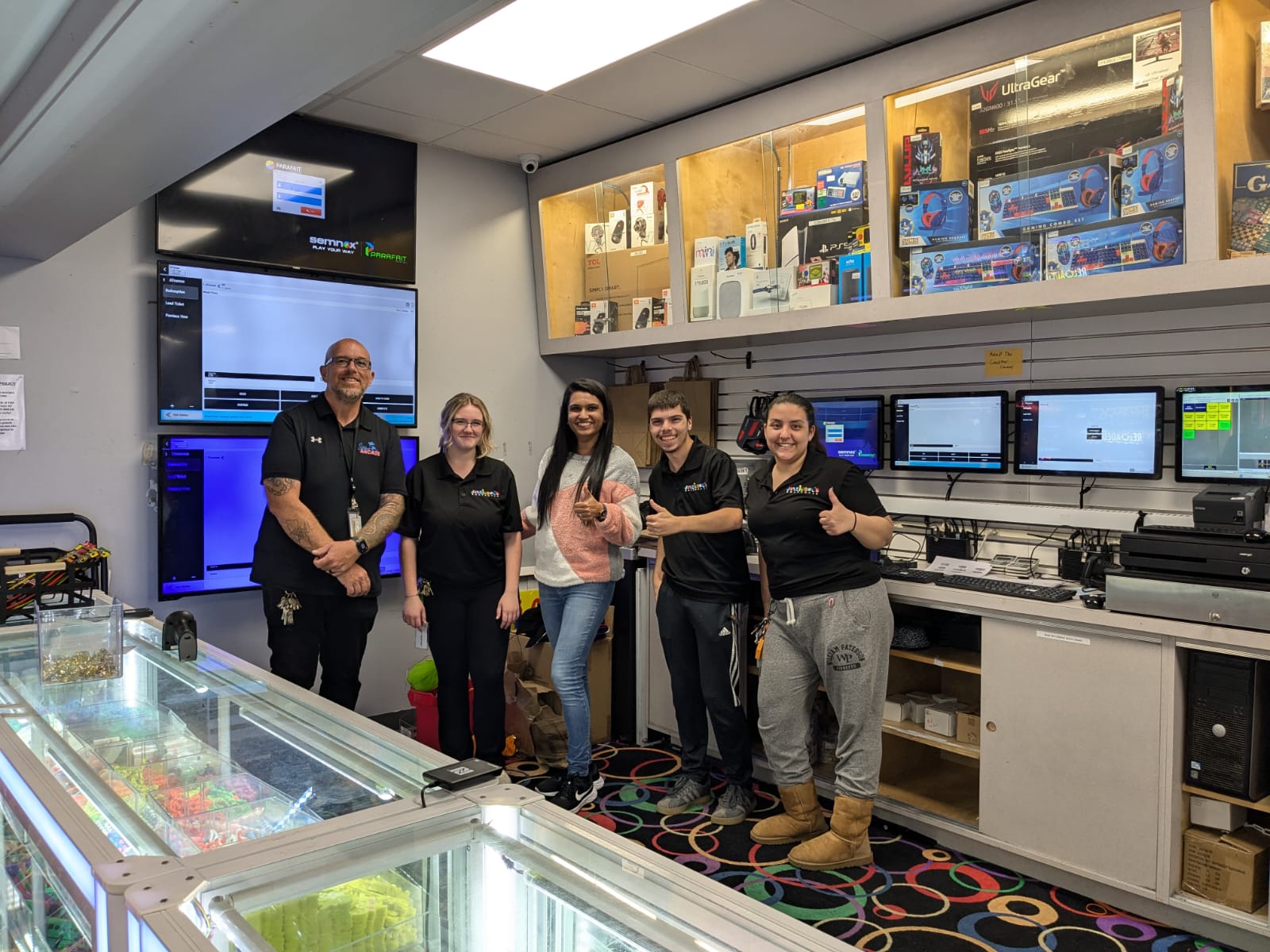
This pattern shows up even at established, multi-generational properties, not just newer parks still finding their footing. Jenkinson’s Boardwalk and its sister property Casino Pier in New Jersey combine an amusement park, several arcades, boardwalk games, mini golf, an aquarium, and a waterpark under one ownership. When the operator set out to unify its systems, the rollout was staged deliberately rather than rushed: arcades were converted first during the quieter off season, ride park systems followed ahead of the spring opening, and midway games were checked and ready before the following season’s waterpark launch. That kind of phased approach is common for a reason. Very few multi-attraction properties get to unify everything at once, and the ones that succeed tend to sequence the work around their own operating calendar instead of forcing it.
Why Midway Parks Are Different
Part of what makes this harder for midway parks specifically is the sheer range of revenue models running at once. A single property might need to support pay-as-you-go attractions, time-based attractions, credit-based attractions, ticketed experiences, and food and beverage operations, all within the same visit, often for the same guest.
A theme park with one dominant model, general admission plus a handful of add-ons, doesn’t face this same layering. A midway park does, by design. And managing all of those revenue models through separate, disconnected systems creates complexity that doesn’t stay flat. It scales right alongside the park’s growth, so the operational burden a five-attraction park feels is nowhere close to what a fifteen-attraction park feels, even though the underlying problem is the same.
What a Unified System Looks Like
The alternative isn’t more software. It’s fewer, better connected systems, built around a few core ideas:
One guest identity
A single credential, whether that’s an RFID card, a wristband, a mobile wallet, or a digital pass, that works the same way at every attraction, counter, and gate in the park.
Great Yarmouth Pleasure Beach, a family run park on England’s east coast that has welcomed guests since 1909, shows what this looks like across a full nine acre property. Its installation ties together ten access control gates with entry validation, more than thirty ride side readers, and annual membership management with photo validation, so the same credential that gets a guest through the gate also verifies their membership at each ride and confirms their identity at renewal. Executive director Jamie Jones has described the rollout as straightforward for staff to learn and a clear improvement in the data the park’s leadership now works from, which tends to follow once identity stops being scattered across separate checkpoints.
One payment ecosystem
A single cashless system that spans rides, arcades, food and beverage, retail, and lockers, so guests never have to think about which payment method works where.
Adventure Coast in the UK, formerly known as Southport Pleasureland, shows how quickly that shift can happen once a park commits to it. As part of a full relaunch and rebrand, the 114 year old park moved to a completely cloud-based, cashless system covering point of sale, handheld ride validation, and payment processing across the property. The installation, which included four POS stations and forty handheld terminals for ride access, was completed in under two weeks, a timeline that mattered given the park was mid-transformation and racing toward a season opening.
One operations dashboard
A single place for managers to see what’s happening across the park right now, instead of switching between systems to piece together a partial picture.
One reporting structure
A single, consistent source of numbers, so attendance, revenue, and attraction performance don’t need to be reconciled by hand at the end of the day.
Q: Does a unified system mean replacing every piece of existing technology at once?
A: Not necessarily. The goal is one connected identity, payment layer, dashboard, and reporting structure, not one single piece of software doing everything. Many operators get there in stages, connecting attractions to a common platform as contracts renew or new attractions get added, rather than ripping out everything on day one.
The Role of Self-Service Technology
Unifying the backend is only half the picture. The other half is putting self-service and mobile tools in front of guests and staff, so the connected system actually gets used at every touchpoint.
Self-service kiosks
Kiosks let guests purchase tickets, reload cards, buy attraction packages, and purchase memberships on their own, distributing traffic away from a single staffed counter and shortening the line before it forms.
Clacton Pier on the Essex coast shows how far a self-service rollout can reach once a park commits to the full ecosystem. Its installation covers outdoor-rated kiosks positioned throughout the pier alongside a multi-screen redemption system and integrated digital signage, giving guests several ways to purchase, redeem, and reload without needing a staffed counter.
Mobile operations
Handheld tools let staff handle admission validation, ride access, membership verification, and queue management from anywhere on the property, instead of tying every transaction to a fixed point.
The same rollout at Clacton Pier extended to mobile-deducting agents for staff and a food and beverage module running mobile POS alongside a kitchen display system, so transactions and orders keep moving whether a guest is at a game, a counter, or a table. Managing Director Billy Ball has pointed to that flexibility as one of the reasons the partnership has held up over time.
Together, these tools turn a unified backend into a faster, easier front-of-house experience, which is where guests actually feel the difference.
Business Benefits of Consolidation
Bringing attractions together under one system tends to pay off in a few consistent ways:
- Improved guest experience, since the visit feels like one continuous park instead of several separate stops
- Higher per-cap spending, driven by a payment experience that removes friction from every purchase
- Better operational control, since managers can see and act on what’s happening across the whole property in real time
- Easier scalability, since adding a new attraction means connecting it to an existing system rather than standing up a new one from scratch
Q: Which of these benefits shows up first after consolidating systems?
A: Usually guest experience and per-cap spending, since those are visible almost immediately once payment and admission friction disappears. Operational control and scalability tend to show their value over a longer stretch, as the park adds attractions and the reporting and staffing advantages compound.
Conclusion
Midway parks present a genuinely unique operational challenge. They combine multiple attraction types, multiple revenue models, and a wide range of guest experiences under one roof, or often across several acres of one property.
The most successful midway parks are moving toward unified technology ecosystems that bring ticketing, cashless payments, self-service kiosks, mobile operations, attraction access, and reporting together into a single platform, rather than continuing to manage each piece separately. Whether that means a nine acre, family run park like Great Yarmouth Pleasure Beach tying guest identity together across every gate and ride, or a relaunching park like Adventure Coast standing up a fully cashless operation in under two weeks, the pattern holds. Purpose built platforms for outdoor, multi-attraction venues, such as Semnox’s Tixera, exist specifically to support that range of situations, from gradual modernization to a full relaunch on a tight timeline.
Because managing multiple attractions shouldn’t require managing multiple systems.
Looking to simplify operations across your midway park?
Contact us today and find out how an integrated venue management platform can connect your venue and guest experiences into one seamless ecosystem.
Frequently Asked Questions
1. What makes midway parks harder to manage than traditional amusement parks?
Midway parks typically combine several attraction types, such as rides, arcades, skill games, food and beverage, and retail, each running its own pricing model and staffing needs, within a single property. Traditional amusement parks and single-format FECs usually operate under one dominant model, which makes the operational layering in a midway park unique.
2. What is a unified venue management system?
A unified system connects ticketing, cashless payments, attraction access, self-service kiosks, mobile operations, and reporting into one platform, so guests move through the park on a single identity and operators manage the business from one dashboard instead of several disconnected ones.
3. Do midway parks need to replace all their existing technology to unify operations?
Not necessarily. Many operators consolidate in stages, connecting individual attractions to a shared identity, payment, and reporting layer as systems come up for renewal or as new attractions are added, rather than replacing everything at once.
4. How does RFID technology help midway park operations?
RFID cards and wristbands give each guest a single credential that works across rides, arcades, food and beverage, retail, and lockers, removing the need for separate tickets or payment methods at each attraction and giving operators a unified view of guest activity.
5. What operational benefits come from consolidating multiple attraction systems?
Operators typically see an improved guest experience, higher per-cap spending, better real time operational control, and easier scalability, since new attractions can connect to an existing platform instead of requiring a new system of their own.

With a deep-rooted understanding of the attractions and leisure industry, Ashish K S stands out as a strategic leader driving innovation and operational efficiency in large-scale ticketing environments. Backed by years of expertise in enterprise-level implementations and cross-functional leadership, Ashish has become a cornerstone of Semnox’s success in the domain.
At Tixera, Semnox’s specialized ticketing and visitor management solution, Ashish leads the charge in transforming how amusement parks, waterparks, and museums manage guests—from the first click to the final exit. His focus on scalable technology, seamless integrations, and customer-first development has empowered venues across the globe to enhance guest experiences while optimizing operations..